
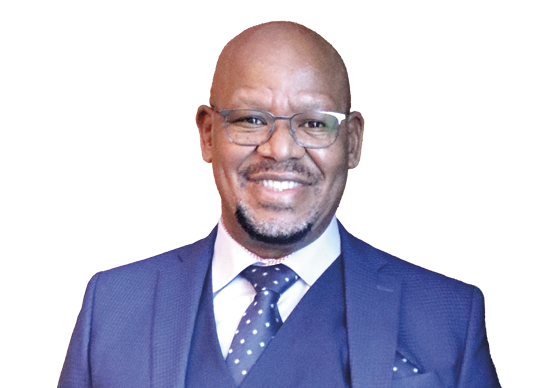
Khandani Msibi, the CEO of 360 Global, recently took part in a hard hitting interview with the Sunday World. Nasipi Ndevu summarises the salient points of that conversation.
When apartheid ended in South Africa, millions hoped that political freedom would soon be matched by economic opportunity. Laws were passed, speeches promised change, and programmes like Broad-Based Black Economic Empowerment (B-BBEE) aimed to open doors.
But decades later, many black entrepreneurs still find themselves locked out of the country’s most powerful industries. In the financial sector, where banks, insurers, and investment houses shape the economy, success for black-owned companies is rare.
Khandani Msibi, CEO of NUMSA investment company and Executive Chairman of 360 Life, has experienced these barriers first-hand. His story is about more than one man’s business challenges, it is a warning about how power and money remain concentrated in a few hands, and how this slows South Africa’s transformation.
A System That Keeps Black Businesses Out
Msibi’s message is direct: South Africa’s financial system is still not designed for black entrepreneurs to thrive. Even in sectors like funeral insurance, where most customers are black, the dominant companies are still white-owned and white-run.
“You go register a company as a black person, and immediately it’s not regarded as a black company,” Msibi says. “There are rules and regulations selectively applied to us. There’s no appetite for risk, and even less for transformation.”
He points to regulators such as the South African Reserve Bank (SARB), the Prudential Authority (PA), and the Financial Sector Conduct Authority (FSCA) as not just neutral referees, but active gatekeepers of the status quo.
The 360 Life Story—A Business Under Siege
The turning point for Msibi was what happened to 360 Life, the life insurance company he chaired.
In 2021, the Prudential Authority placed the company under “curatorship”—a legal process where a curator takes over the running of a business to “fix” problems. The official reason was concerns about solvency and compliance. But Msibi insists the company was healthy and had plans to bring in more capital, even offering property as security. “They dismissed everything we presented,” he says.
The curator stopped 360 Life from writing new business, something that quickly suffocates an insurer. Msibi says the curator also removed key staff, ended relationships with essential service providers, and increased costs.
Four years later, no clear report has been released to explain the need for this curatorship.
When Regulators Protect the Powerful
For Msibi, this is part of a bigger problem: “regulatory capture”. This is when watchdog bodies end up serving the interests of the companies they are supposed to police.
In South Africa’s financial sector, Msibi says, there is a “revolving door”—regulators often leave their posts to take high-paying jobs at big banks and insurers. This gives the largest companies a strong influence over the rules, while black entrepreneurs are left out of the conversation.
The result is double standards: white-owned companies are given time to recover from difficulties, while black-owned companies are closed quickly.
B-BBEE—A Promise That Falls Short
Broad-Based Black Economic Empowerment was meant to correct economic inequalities. But Msibi calls it “a false promise”.
“They talk about giving 30% to black businesses, but that just means 70% still goes to white businesses,” he says. “And it’s structured so that control never leaves their hands.”
True empowerment, he argues, is not about being a minority shareholder, it’s about owning, leading, and building institutions from scratch.
The Missing Political Backbone
While the private sector is often accused of resisting transformation, Msibi believes the government shares the blame. He says Parliament and the ANC-led government have not acted to protect black-owned businesses from unfair treatment.
“We’ve written to Parliament, we’ve testified, we’ve submitted reports. Nothing,” he says. “Where were they when 360 Life was being destroyed? Where were they when VBS was liquidated?”
For him, the ANC has not fulfilled its historic promise of economic liberation. Decades after democracy began, banks, regulators, and markets are still controlled by a small elite.
Expanding Beyond Insurance
Despite these setbacks, Msibi has not stopped building. His investment group has diversified into biotechnology, pharmaceuticals, and retail health products.
Projects include:
- A malaria drug developed with the Council for Scientific and Industrial Research (CSIR).
- Over-the-counter products for sleep and immunity.
The diversification was not just for growth, it was a survival strategy after losing 70% of revenue when 360 Life was taken down.
The Cost of Exclusion
Msibi warns that exclusion from the financial sector doesn’t only hurt companies—it damages communities and limits the dreams of future generations.
“We’re teaching young black people that financial services are not for them. That they must be DJs, run taverns, or drive taxis. But what about banks? What about actuaries? What about venture capital?”
He believes South Africa needs a complete black financial ecosystem, with access to capital, mentorship, and lobbying power.
For many young people, financial services sound like something far away—something that only matters when you’re older, rich, or running a business. In reality, financial services touch our lives every day. From opening a bank account to buying a car, paying for studies, or even starting a small side hustle, the way we use and manage money shapes our future.
Understanding financial services is not just about learning how to save or budget, it’s about building the skills to make smart decisions, avoid costly mistakes, and create opportunities for yourself.
The Early Start Advantage
Learning about financial services early gives young people a powerful head start. When you know how banking, credit, investments, and insurance work, you can:
- Avoid debt traps: Many young people fall into expensive debt because they don’t understand interest rates or repayment terms.
- Build a strong credit record: A good credit score opens doors to better loans, rental agreements, and even job opportunities.
- Start investing sooner: The earlier you start, the more time your money must grow through compound interest. Simply put, financial literacy in your teens or twenties can mean the difference between struggling with money for decades or building long-term stability.
Why Investment Access Matters
Investments are the fuel that drives business growth. They allow companies to expand, hire workers, and innovate. When only a small group controls most of the investment capital, wealth stays concentrated. Black-owned companies often face higher barriers to funding—stricter security requirements or higher interest rates. Limited networks—fewer connections to major investors. Bias—assumptions that black-led companies are riskier, even without evidence. Without fair access to investment, it’s difficult for black-owned companies to grow into industry leaders.
Inclusive Investment—Good for Everyone
Inclusive investment is not only about justice, but also good for the economy. When more people can start and grow businesses, job creation rises, tax revenue increases, and innovation accelerates.
Other countries, like Malaysia and South Korea, have shown that targeted investment in historically excluded groups can create entire new industries. South Africa has the potential to do the same.
Practical Steps Toward Fairer Investment
- Equal Access to Capital—Government and private funds should set measurable targets for funding black entrepreneurs.
- Mentorship and Training—Experienced business leaders should guide and connect new entrepreneurs.
- Regulatory Reform—Hold financial regulators accountable for double standards.
- Black Investment Networks—Build cooperatives, investment clubs, and private equity funds led by black businesspeople.
The Power of Unity—Building a Lobbying Force
Msibi’s strongest call is for unity. He urges black professionals, entrepreneurs, and civil society to form a lobbying bloc to challenge institutional bias.
He points to Stellenbosch as an example of coordinated economic development, Afrikaner business networks intentionally built ecosystems of trust, capital, and innovation. Black South Africans, he says, must do the same.
Black unity has always been a driving force for change. From the civil rights movement in the United States to the anti-apartheid struggle in South Africa, collective action has broken down barriers and reshaped societies. Today, one of the most powerful frontiers for unity lies in economic empowerment.
Economic inequality remains one of the biggest challenges facing black communities worldwide. Too often, wealth is concentrated in the hands of a few, while black-owned businesses struggle to access capital, markets, and opportunities. When communities are divided, it becomes easier for systemic barriers to persist. But when black people unite with a shared economic vision, they can pool resources, strengthen buying power, and influence markets.
Unity in economics starts with intentional support for black-owned businesses, professionals, and creators. Every rand, dollar, or pound spent within the community strengthens it. This creates a cycle where businesses grow, jobs are created, and wealth circulates rather than leaving the community.
Looking Ahead—Fighting with Purpose
Msibi remains in legal battles to recover 360 Life and is supporting academic research into regulatory bias. He believes documenting these cases is essential for real change.
“I want someone to do a PhD on this. We need to name it, study it, and fix it,” he says.
Ownership Is the Key
Khandani Msibi’s journey is both a warning and an inspiration. It reveals how systemic barriers continue to limit South Africa’s economic transformation and how urgent it is to fight for real ownership.
The financial sector is one of the most powerful engines of change. If black South Africans remain excluded from it, the dream of liberation will remain incomplete.
In any democracy, Parliament is the voice of the people. It is where laws are made, policies are debated, and decisions are taken that shape the future of the nation.
In South Africa, Parliament carries an even greater responsibility, to correct the economic inequalities left behind by apartheid.
One of the most urgent areas for parliamentary action is the fight for equality in black ownership. While political freedom was achieved in 1994, economic freedom remains out of reach for many black South Africans. Industries such as banking, insurance, mining, and manufacturing are still largely owned and controlled by a small, mostly white elite. Without decisive action, the promise of transformation will remain incomplete.
Parliament has the power to change this reality by introducing and enforcing legislation that creates real opportunities for black ownership, not just token participation. This means closing loopholes in Broad-Based Black Economic Empowerment (B-BBEE) policies, ensuring state contracts truly benefit black-owned businesses, and holding regulators accountable for removing barriers to market entry.
Linking equality of ownership to economic empowerment is essential. True empowerment goes beyond short-term contracts or small shares in large companies, it means giving Black entrepreneurs full control of assets, industries, and supply chains. When ownership is widespread, wealth circulates within communities, creating jobs, building generational wealth, and strengthening the national economy.
Parliament’s role is also to protect black-owned businesses from unfair treatment by regulatory bodies and large corporations. This includes oversight of financial institutions to ensure that access to funding, licensing, and markets is fair and transparent.
Economic empowerment cannot exist without ownership, and ownership equality cannot happen without strong political will. Parliament must lead the charge, ensuring that transformation is not just a political slogan, but a measurable reality that benefits all South Africans.
Msibi’s message is clear: transformation without ownership is an illusion. Ownership starts with the courage to challenge unfair systems and the determination to build strong, independent institutions.