
The South African government is demanding results when it comes to Broad-Based Black Economic Empowerment, but whether it can deliver on that ambition is another question.
Thirty years into democracy, South Africa’s government is sending a clear message to the business community: Broad-Based Black Economic Empowerment is not going anywhere—but it is going to change.
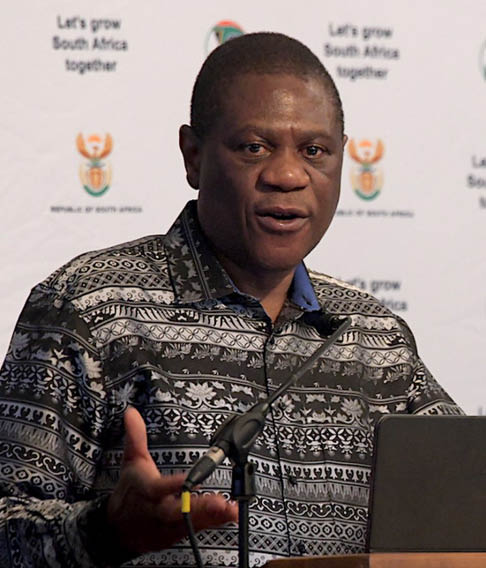
Speaking at the Second Frank Dialogue on the Future of B-BBEE in Durban on Friday, Deputy President Paul Mashatile struck a tone that was equal parts defensive and demanding. Defensive of the policy’s constitutional and moral foundations. Demanding when it came to results.
“Abandoning B-BBEE is not an option,” he told an audience of business leaders, traditional leaders, economists, and policymakers gathered at the Coastlands Umhlanga Hotel. “The path forward is reform, strengthening, and disciplined implementation.”
What made the address notable was its candour. Mashatile did not arrive with a victory lap. He acknowledged that procurement processes continue to marginalise black-owned businesses, that fronting remains rampant, and that the gap between the policy’s ambitions and its lived outcomes is still too wide.
“Policy legitimacy depends on outcomes,” he said pointedly. “Where empowerment becomes paper-based rather than production-based, where fronting occurs, and where exclusion persists, trust is weakened.”
The numbers he cited painted a sobering picture of the economy B-BBEE is trying to transform. In the fourth quarter of 2025, Stats SA recorded an official unemployment rate of 31.4%, representing approximately 7.8 million people out of work. Youth unemployment was far worse—57% for those aged 15 to 24, and 39.2% for those between 25 and 34. Around 3.5 million young South Africans in the 15-to-24 age bracket were classified as NEET—not in employment, education, or training.
Meanwhile, the World Bank projects economic growth of just 0.7% for 2025, far too slow to make a dent in a Gini coefficient of approximately 63—one of the highest inequality measures in the world. The bottom 40% of the population earns just 11.5% of the national income, while the top 20% takes home nearly 60%.
Against this backdrop, Mashatile’s argument was straightforward: the problem is not the policy, it is the implementation.
To move from rhetoric to accountability, the Deputy President outlined five measurable outcomes that the government intends to monitor and report on publicly: procurement, access to finance, supplier graduation, management control, and enforcement.
This signals a meaningful shift in how success will be defined. For years, critics have argued that B-BBEE scorecards measure activity rather than impact—that a company can tick compliance boxes without meaningfully changing who owns assets, who sits in the boardroom, or who supplies the factory floor. The new framework, Mashatile suggested, will try to close that gap.
Underpinning all of this is a two-phase policy review being led by the Department of Trade, Industry, and Competition under Minister Parks Tau—a process that is expected to reshape the codes of good practice and tighten enforcement mechanisms.
Agriculture and the Ocean Economy: The Next Frontier
Perhaps the most forward-looking sections of the address dealt with two sectors where transformation has barely begun.
On agriculture, Mashatile was blunt. Citing economist Wandile Sihlobo’s work, he noted that black farmers currently account for roughly 10% of South Africa’s commercial agricultural output. “This stark figure tells us that our growth agenda must have a deliberate bias towards the empowerment of black farmers,” he said.
The tools he pointed to were familiar—ownership through land reform, skills development and mentorship, preferential procurement that directs government and retail buying power towards black-owned farms, and enterprise development that links emerging farmers into agro-processing and distribution chains. What was different was the urgency.
On the ocean economy, the Deputy President turned his attention to KwaZulu-Natal’s strategic position, anchored by the ports of Durban and Richards Bay. He described South Africa’s maritime potential—fisheries, coastal tourism, marine manufacturing, and emerging sectors like ocean biotechnology and renewable energy—as largely untapped, and largely untransformed.
“If transformation is to be meaningful,” he said, “then black entrepreneurs, professionals, and communities must be at the centre of this growth.”
‘Fronting Is Economic Sabotage’
On the question of integrity, Mashatile was unambiguous. Fronting—the practice of using black shareholders or directors as window dressing to secure B-BBEE ratings without genuine empowerment—will be treated as economic sabotage.
He called for stronger verification processes, faster finalisation of cases, and real consequences for offenders. The message was directed squarely at businesses that have learned to game the system: the era of consequence-free compliance theatre is meant to be over.
For African business leaders watching from beyond South Africa’s borders, the Durban dialogue carries broader significance. South Africa remains the continent’s most industrialised economy and its approach to economic transformation—however contested—is closely watched by governments grappling with their own post-colonial inequality challenges.
The shift Mashatile described, from compliance to outcomes, from representation to productive inclusion, and from isolated empowerment transactions to economy-wide policy coherence, reflects a debate playing out across Africa about how to make growth work for the majority.
Whether South Africa can deliver on that ambition is another question. The policy review is underway. The targets have been set. The Deputy President has given his word that the government is not retreating.
Now, business and the public will be watching to see whether the numbers move.
The African Mirror