
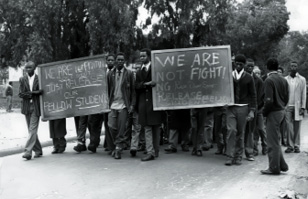
Fifty years after the Soweto Uprising, the next revolution belongs to entrepreneurs, innovators and builders of an inclusive economy
There are defining moments in history that ask us not only to remember what happened, but to reflect on what it now demands of us.
As South Africa commemorates the 50th anniversary of the 1976 Youth Uprising, I find myself thinking less about history as a distant event and more about history as a responsibility. I think about the young people of Soweto who marched with courage that outweighed their years, armed not with wealth or influence, but with conviction. They knew that speaking out against injustice could cost them their lives, yet they marched anyway.
They were students.
They were dreamers.
They were ordinary young people who became extraordinary because they believed that future generations deserved something better.
Today, almost fifty years later, I often ask myself a simple but deeply uncomfortable question:
Do we truly understand the value of the freedom we inherited?
The young heroes of 1976 fought for the right to learn, to speak freely, to dream beyond the limitations imposed by an unjust system. They fought so that young Black South Africans could one day choose their own careers, build businesses, become professionals, own property, lead companies and participate fully in the economy of a democratic nation.
Their battlefield was political oppression.
Ours is economic transformation.
Their fight was against laws designed to exclude them.
Our fight is against inequality, unemployment, limited access to finance, slow transformation, and an economy that still leaves far too many young people standing outside the gates of opportunity.
History is asking my generation a different question.
Not, “Will you fight for freedom?”
But rather,
“What will you do with the freedom you already have?”
That question has shaped my own journey.
When I first entered the publishing industry, I never imagined that I would one day lead one of South Africa’s longest-standing publications dedicated to celebrating Black business excellence and transformation. I did not begin with a grand strategy or a perfectly mapped-out career. I simply wanted to contribute to something bigger than myself.
I wanted to tell stories that mattered.
I wanted Black excellence to become the expectation rather than the exception.
I wanted entrepreneurs, professionals, industrialists and innovators to see themselves reflected in the pages of a publication that believed in their potential long before the world recognised it.
That vision became BBQ Magazine.
Over the years, BBQ Magazine has grown beyond being a publication. It has become a platform for recognising the remarkable achievements of Black South Africans who continue to redefine industries, build enterprises, create employment and contribute meaningfully to the country’s economy.
Every edition reminds me that transformation is not merely a policy discussion or a compliance exercise.
Transformation has a human face.
It is the young woman who starts a manufacturing company despite being told that heavy industry is no place for women.
It is the township entrepreneur who refuses to allow unemployment to define the future of an entire community.
It is the graduate who chooses entrepreneurship instead of waiting endlessly for employment.
It is the farmer bringing innovation to rural communities.
It is the engineer designing solutions for African challenges.
It is the young software developer building technology that competes on the global stage.
These are the stories that inspire me every day.
Through the BBQ Awards, we have had the privilege of celebrating thousands of individuals and organisations whose work demonstrates that economic transformation is not an abstract concept t is happening every day through courage, innovation and determination.
Yet I would be dishonest if I ignored the realities facing today’s youth.
Young South Africans are expected to innovate in one of the most uncertain economic environments in our democratic history.
Many graduate into unemployment.
Many entrepreneurs struggle to access funding.
Businesses face rising operational costs, unreliable infrastructure, energy challenges and increasing global competition.
For many young people, success requires extraordinary resilience before the first opportunity even arrives.
Despite these realities, I remain optimistic.
Every province I visit introduces me to young entrepreneurs who refuse to surrender their dreams to difficult circumstances.
I meet innovators designing technology solutions for African markets.
I meet manufacturers proudly producing locally made products.
I meet farmers transforming agriculture through sustainability and innovation.
I meet creatives exporting African excellence across the world.
I meet professionals leaving comfortable careers to build businesses that create employment for others.
Each encounter reminds me of something powerful.
The spirit of 1976 did not disappear.
It simply changed its battlefield.
Today’s battlefield is economic inclusion.
It is ownership.
It is industrialisation.
It is innovation.
It is access to markets.
It is financial inclusion.
It is creating businesses that generate employment, restore dignity and strengthen communities.
Political freedom gave us the right to participate.
Economic freedom will determine whether the participation becomes prosperity.
That is why I believe the next chapter of South Africa’s democratic journey cannot simply focus on economic growth.
It must focus on inclusive economic growth.
Growth that creates opportunities.
Growth that develops entrepreneurs.
Growth that strengthens local manufacturing.
Growth that supports Black industrialists.
Growth that encourages innovation.
Growth that ensures young people become employers instead of remaining job seekers.
This responsibility cannot rest solely on government.
Nor can it belong only to large corporations.
Transformation belongs to all of us.
It belongs to every executive who intentionally develops young leaders.
It belongs to every entrepreneur who chooses ethical leadership over shortcuts.
It belongs to established business owners who mentor emerging entrepreneurs instead of viewing them as competition.
It belongs to institutions that invest in skills development rather than simply discussing it.
It belongs to every South African who believes that inclusion strengthens the economy instead of weakening it.
Transformation is everyone’s responsibility.
As Publisher of BBQ Magazine, I have always believed that leadership is not about occupying the spotlight.
Leadership is about creating platforms where others can shine.
That philosophy continues to guide everything we do.
Every profile we publish.
Every entrepreneur we celebrate.
Every business leader we recognise.
Every award we present.
Every conversation we facilitate.
Every partnership we build.
Our purpose has always extended beyond publishing stories.
Our mission has been to inspire future success.
If a young entrepreneur opens BBQ Magazine and believes, perhaps for the first time, that their dream is possible, then we have fulfilled our purpose.
If an established executive decides to mentor a young business owner or leader because of something they read in these pages, we have contributed to transformation.
If an investor discovers an emerging entrepreneur through our platform, then we have helped build the economy our country deserves.
That is why this publication continues to matter.
As we commemorate fifty years since the Youth Uprising, I believe South Africa stands at another defining moment.
The next fifty years will not be determined only by legislation or public policy.
They will be shaped by entrepreneurs.
By innovators.
By manufacturers.
By farmers.
By engineers.
By creatives.
By technology pioneers.
By educators.
By professionals.
By young people courageous enough to build where others see barriers.
Economic freedom will not arrive through speeches alone.
It will be built through businesses.
It will be built through investment.
It will be built through collaboration.
It will be built through innovation.
It will be built through ethical leadership.
Most importantly, it will be built by people who refuse to allow circumstances to define their future.
To every young South African reading this edition of BBQ Magazine, I want you to remember something.
Never underestimate the value of your ideas.
Never allow your age to become your limitation.
Never believe that meaningful leadership begins only after someone gives you permission.
Some of history’s greatest movements were started by young people who simply refused to accept that things had to remain the way they were.
Your business idea matters.
Your innovation matters.
Your determination matters.
Your contribution to South Africa’s economy matters.
The future of our nation will not be written only in Parliament or corporate boardrooms.
It will also be written in township businesses.
In factories.
In farms.
In technology hubs.
In research laboratories.
In community projects.
In start-ups.
In family businesses.
In every enterprise built by courageous South Africans who believe that creating opportunity is the highest form of service.
The heroes of 1976 passed the torch to our generation.
They secured our political freedom.
Our responsibility is to transform that freedom into economic opportunity for millions more.
May we honour their sacrifice not only every June, but every day through excellence, integrity and purpose.
May we build businesses that uplift communities instead of merely enriching individuals.
May we create jobs where unemployment has become accepted.
May we mentor those coming behind us.
May we choose collaboration over division.
May we lead with courage when the easier choice is silence.
And may future generations look back on our generation and say that we did not simply inherit freedom—we expanded it.
We transformed it into enterprise.
We transformed it into opportunity.
We transformed it into dignity.
We transformed it into prosperity.
Because ultimately, that is the greatest tribute we can offer the courageous young people of 1976.
They fought for the freedom to dream.
Our responsibility is to build an economy where every South African has the opportunity to make those dreams a reality.
Linda Tom is the
BBQ Awards
Project Manager