The year 2025 has been hugely successful for Rand Water, with the highlight being the opening of the Zuikerbosch Station 5A Water Purification Plant. With the help of the entity’s Group Chief Executive, Sipho Mosai, we take a look back at the year that was through the lens of key pillars, including infrastructure, municipalities, sustainability, and financial security.
Since 1903, Rand Water has been playing an integral role in the development and growth of Gauteng, its cities, and its surrounding regions by providing water to metropolitan municipalities, local municipalities, mines, and industries.
Rand Water is a water board that was established and is governed in terms of Chapter 6 of the Water Services Act, No. 108 of 1997. Rand Water is listed as a National Government Business Enterprise in Schedule 3b of the Public Finance Management Act No.1 of 1999. The Government of the Republic of South Africa, through the Department of Water and Sanitation (“the Executive Authority”), duly represented by the Minister of Water and Sanitation, is the sole Shareholder of Rand Water.
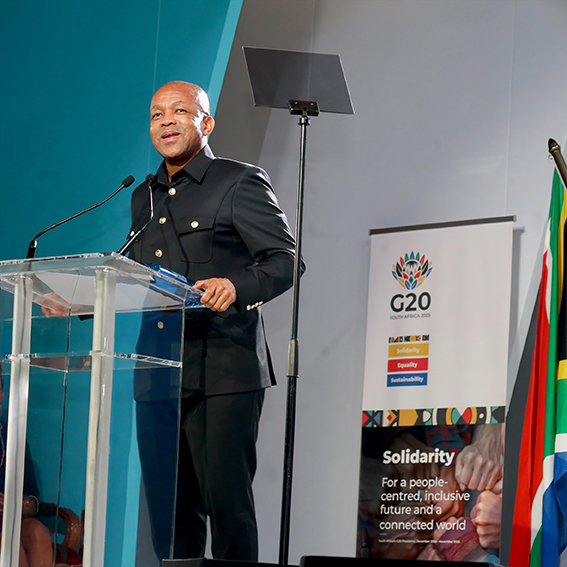
Rand Water’s mandate, as the largest bulk water utility in Africa and one of the largest in the world, is to provide bulk potable water to municipalities who then supply water to more than 18 million people in Gauteng, parts of Mpumalanga, Free State and North West Provinces—an area that stretches over 18 000 km2. For 122 years, Rand Water has continued with its mandate of water and sanitation services provision in its area of operations.
The organisation’s core value chain involves purchasing raw water from the Department of Water and Sanitation (DWS) and distributing potable water to the aforesaid customers. Over decades, DWS has been developing and implementing various water transfer projects, sourcing raw water from Lesotho and other catchments with abundant resources and delivering it into the Integrated Vaal River System (IVRS). The latest DWS development project is the Lesotho Highlands Phase 2(a), which should be commissioned by 2028.
Rand Water has a global reputation for providing water of high quality that ranks among the best in the world, having consistently met and exceeded national and international standards on water quality. Rand Water benchmarks for quality water standards (among others) against the World Health Organization and the United States of America’s Environmental Protection Agency (EPA).
Infrastructure and a Presidential seal of approval
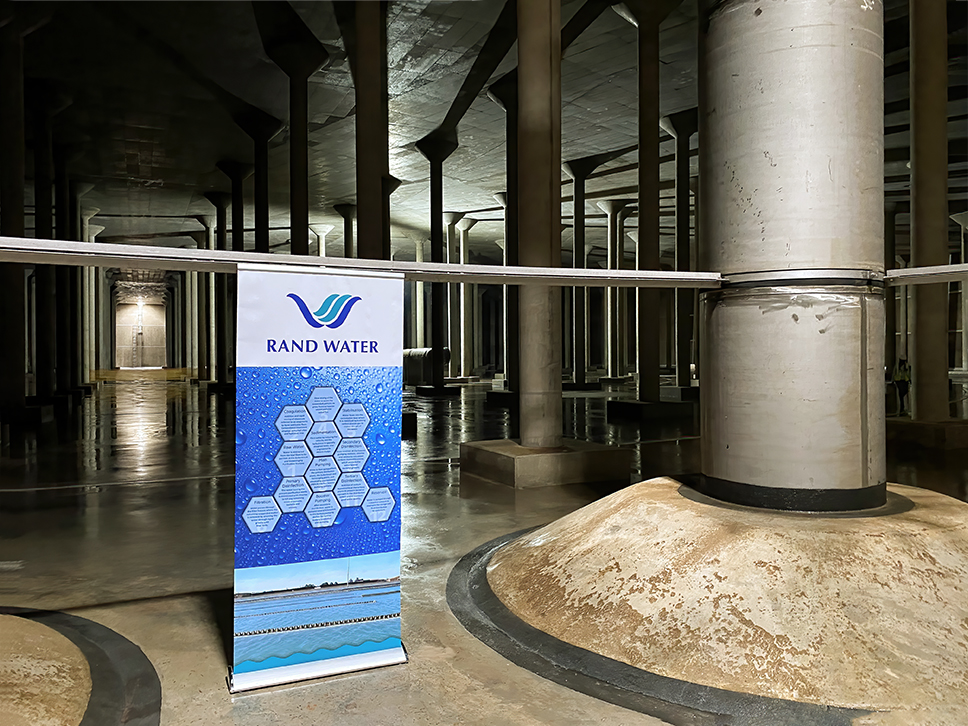
Recent milestones showcase both scale and foresight. Rand Water marked its 120th anniversary with the launch of the 210 Ml Vlakfontein Reservoir—the largest cylindrical post-tensioned concrete reservoir in the world—and the commissioning of the Zuikerbosch Station 5A Water Purification Plant in Emfuleni. Together, these projects add resilience to the network and demonstrate long-term planning in action.
“Building and maintaining infrastructure is key to bulk water provision,” says Sipho Mosai, the Group Chief Executive of Rand Water. “Station 5A and the Vlakfontein Reservoir showcase our commitment and discipline in seeing projects through even in difficult operating environments. They are the result of years of forward planning.”
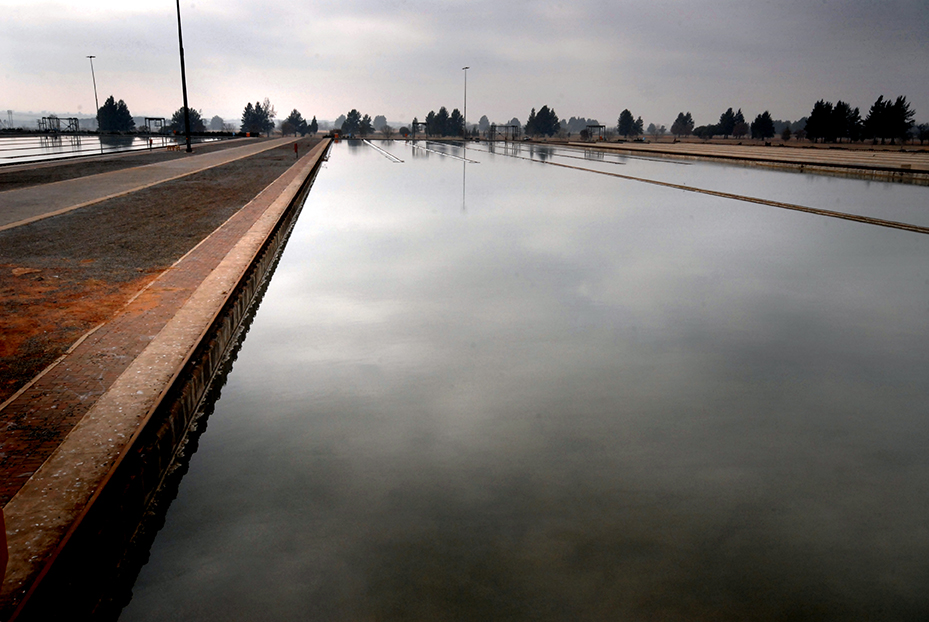
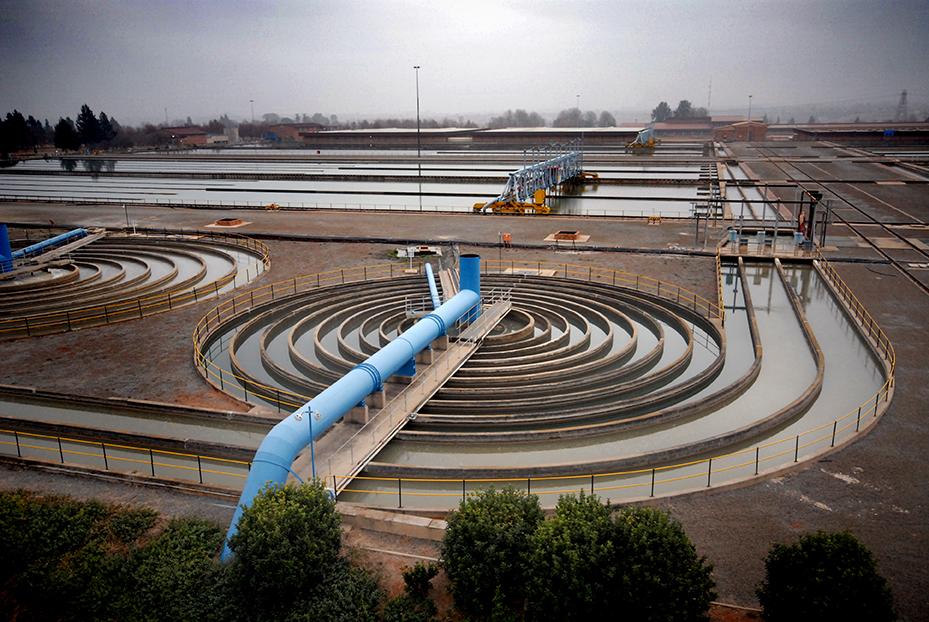
In early August 2025, President Cyril Ramaphosa officiated at the launch of Station 5A at Rand Water’s Zuikerbosch Water Purification Plant. The Zuikerbosch plant is the biggest state-of-the-art water purification plant in Africa and one of Rand Water’s key water supply infrastructures. Valued at R4.8 billion, the project has delivered many socio-economic benefits since its inception in 2019 and construction is still ongoing.
It forms an essential part of Rand Water’s long-term infrastructure strategy, purposefully developed to accommodate and anticipate the steady increase in customer demand, ensuring a dependable and uninterrupted water supply for millions of people. It will provide a massive 600 Ml of purified water each day, while its location at Emfuleni ensures that, primarily, it bolsters water security for the people and industries in South Africa’s industrial heartland. The Emfuleni municipality is situated in Gauteng in the heart of the Vaal Triangle, which is home to key towns such as Vanderbijlpark, Vereeniging, and Sebokeng.
At the ceremony, President Ramaphosa said: “Let the waters that flow through this facility be a testament to our commitment to provide clean and safe water to all our people.
“This plant is part of Rand Water’s efforts to meet growing demand and ensure sustainable water security. We are celebrating the completion of a vital piece of infrastructure, and we are affirming our shared commitment to the people of South Africa to continuously provide clean, reliable and safe water.
“Water is not just a basic human need. It is the lifeblood of any thriving society. Water sustains life, supports industry, empowers agriculture, and fuels innovation.”
Rand Water Group CEO Sipho Mosai says these words capture the essence of Rand Water’s mission and the significance of this new phase of the Zuikerbosch Station 5A plant.
“This project stands as a proud symbol of our shared determination to secure South Africa’s water future. It represents not only an engineering achievement, but also a commitment to service delivery, resilience, and equity. Every litre purified here reflects the collective effort of government, engineers, scientists, and communities working together to ensure that clean water—the foundation of life, health, and economic growth—reaches every household, business, and institution in our region.
“At Rand Water, we remain steadfast in advancing sustainable water management and innovation. We are investing in modern infrastructure, strengthening partnerships, and building the skills required to meet future challenges. This facility is more than a plant; it is a promise—a promise that we will continue to honour the trust placed in us to deliver life-giving water, now and for generations to come.”
Small business and micro-enterprises have also received substantial benefits in the construction of Zuikerbosch, as Rand Water has awarded work packages to 48 small, medium, and micro enterprises, totalling R177 million. These SMMEs were contracted to provide services such as bedding, backfilling, fencing, site security, and other construction works.
Municipalities and Rand Water’s evolving role
Beyond infrastructure, Rand Water’s evolving role in the municipal sphere reflects its willingness to tackle the country’s most pressing delivery challenges. “From a business point of view, it is extremely important for Rand Water to support municipalities in the delivery of water,” says Mosai. “Many municipalities are taking strain, and we feel that strain through late or non-payment. It therefore makes sense for us to enter that space in a financially sustainable way.”
One example is the Section 63 intervention in the Emfuleni Local Municipality, where Rand Water was appointed by the Department of Water and Sanitation as implementing agent for the Sedibeng Sewer Scheme and Vaal River System Interventions. The success of that assignment prompted the revival of Rand Water Services—a subsidiary created to partner with the private sector and municipalities on water and sanitation delivery.
“Rand Water Services will operate as an independent, professionally run special-purpose vehicle,” explains Mosai. “It will manage operations, maintenance and billing, ring-fencing revenue for water and sanitation activities so that funds are not absorbed into wider municipal budgets. This is how we can ensure that every rand collected for water goes back into water.”
He believes the proposed amendments to the Water Services Act will further enable such models, creating conditions for stronger collaboration between water boards and municipalities.
In addition, Rand Water is not only committed to securing a reliable water supply for their municipalities, but also to promoting the delivery of water-related services to communities outside its designated supply area.
The organisation effectively coordinates, administers, and manages its Corporate Social Investment (CSI) resources through the Rand Water Foundation, to support community development projects in collaboration with various donors and relevant stakeholders.
The bulk water utility is crucial to strategic growth, which often necessitates making decisions that prioritise socio-economic benefits rather than immediate commercial gains.
“We at Rand Water promote prosperity and development not only in South Africa, but also across the African continent by supporting the broader objectives of the national government,” Mosai says. “Our commitment to social impact embodies the organisation’s core values of equity and caring, which are crucial in a nation where access to clean water is a fundamental matter of social justice.
“The future of South Africa looks like one of hope, preservation, and effort. Rand Water’s vision is to be the cornerstone of sustainable, competitive water and sanitation solutions for Africa. Our mission is clear: to meet the expectations of customers, partners, and government by attracting and developing cutting-edge skills in water services, maintaining robust financial health, and nurturing productive partnerships.”
Sustainability as a non-negotiable
In South Africa, the provision of water services has become a crucial lifeline amid rapid urbanisation, population growth, and the relentless effects of climate change. As cities swell and the demand for clean water surges, the need for resilient infrastructure and adept management of water resources has never been more urgent.
“It is vital that society as a whole acknowledges that despite great effort, severe water challenges persist, posing a threat not only to humankind, but to all species in the environment,” says Mosai. “We recognise that scaling water access is not just about building more pipes—it’s about re-imaging how things are done, financed, and how outcomes are measured.”
He says Rand Water has garnered a global reputation for delivering water of the highest quality, consistently meeting and surpassing national and international standards and building large water infrastructure projects. “Immense effort has been made to ensure the maintenance of a strong financial profile amidst the economic challenges and tough operating environment making liquidity and financial risk management fundamental cornerstones towards Rand Water’s financial sustainability.”
Rand Water’s commitment to constructive engagement with its stakeholders is driven by five corporate values: innovation, excellence, caring, spirit of partnership, and integrity, he says. “These values guide our behaviour and are meticulously applied when engaging all stakeholders,” says Mosai. “Our stakeholder interaction is also guided by the best business practice principles of inclusivity, materiality, and responsiveness. Our reputation rests on the value we deliver to our stakeholders and the way we manage our contributions to, and the impact we have on the water sector and with South Africa’s economic development agenda at large.”
Community engagement and corporate social responsibility are key elements of that. Rand Water has spearheaded initiatives that go beyond water supply and tackle broader socio-economic challenges, aligning the organisation’s goals with national development priorities. “Rand Water’s operational activities impact the environment, people, and broader society,” says Mosai. “We, therefore, have a responsibility to reduce our negative impacts, increase our positive impacts, and create sustainable benefits for our internal and external stakeholders.”
The United Nations’ Sustainable Development Goals aim to eradicate poverty, safeguard the environment, and promote peace and prosperity by 2030. “As the provider of bulk potable water and sanitation services, Rand Water directly supports Goal 6, which aims to ensure available and sustainable management of water and sanitation for all, while other SDGs are indirectly supported through our core activities,” says Mosai.
In line with SDG Goal 6, Rand Water provides a reliable supply of water with no unplanned interruptions to bulk supply exceeding 24 hours. It has achieved 99.70% on the water quality Composite Indicator; and continues to implement infrastructure projects to ensure transportation of safe drinking water.
Rand Water’s SDG contribution also includes Goal 5 (Gender Equality), with 43% of its employees and 76% of its managers being female; Goal 8 (Decent Work and Economic Growth), with 3 027 job created through the Rand Water Foundation and other infrastructure projects; Goal 12 (Responsible Consumption and Production), through its Project 1600 programme to improve water use efficiency; and Goal 13 (Climate Action), through ongoing improvements in its energy efficiency and reduction of its carbon footprint.
The Water Wise campaign, a sub-brand of Rand Water, is committed to educating and influencing stakeholders on the value of water and the importance of its conservation. Water Wise is also responsible for educating stakeholders on efficient water use, conservation, and water demand management. Rand Water’s Water Wise Education Team (WWET) offers an education service to organisations at external venues to assist them with a variety of Water Wise programmes. These include educator workshops, interactive presentations, roadshows and puppet shows. Water Wise uses interactive methodologies to promote the reduction of wasteful water use, the prevention of water pollution, and the protection of water sources, aiming to create a sustainable future for all.
Mosai says Rand Water is not resting on its laurels despite its accomplishments. “The toughest tests lie ahead with climate strain, municipal weak financial systems and non-payment of bulk water utilities. Hard work and innovation in Rand Water’s value chain need to be used as a motivation by municipalities to reticulate the water they receive from Rand Water to taps for the benefit of communities. Again to quote President Ramaphosa: ‘Water is not just a basic human need. It is the lifeblood of any thriving society. Water sustains life, supports industry, empowers agriculture and fuels innovation… Water is an enabler of economic growth.’ The legacy we are building at Rand Water is one of resilience, innovation, and inclusive water provision.”
‘Every drop counts’ is not a passing phrase
A major concern for Mosai and the public alike is non-revenue water, at municipal levels, which has resulted in a significant number of litres of water lost through leaks. It is estimated that 1.6 billion litres a day is lost. This challenge drastically increases water usage across Gauteng and municipalities that are supplied by Rand Water.
The No Drop certification measures water use efficiency in municipal drinking water distribution systems. It uses non-revenue water as a key performance indicator to gauge water wastage. The evaluation examines physical water losses—leaks, daily per capita water usage, strategies to reduce water losses, and the effectiveness of metering, billing, and revenue collection systems.
According to the No Drop report independently produced by the Department of Water and Sanitation, only four Water Services Authorities achieved the certification by scoring 90%, a significant drop from 44 municipalities in 2014. The report also noted an increase in non-revenue water from 37% in 2014 to 47% in 2023 in South Africa.
Due to these high physical losses through water leaks in municipal distribution systems, South Africa’s average per capita water consumption is approximately 218 litres per day, compared to the international average of 173 litres per day. Gauteng’s consumption is particularly high at 279 litres per day.
The report emphasised that Gauteng’s water interruptions are not due to a lack of bulk water provision, but rather high-water consumption driven by significant physical water losses in the municipal distribution system.
“These challenges can be addressed through better operations, maintenance of water infrastructure, and effective implementation of water conservation, including demand management measures. It is crucial that these interventions include education and awareness, pressure management, reduction of night flows, repairing leaks, revenue collection, and debt supervision,” Mosai insists.
“Moreover, Rand Water has collaborated with municipalities that are facing significant financial strain and impacted by non-revenue water. This spirit of collaboration was evident when the Emfuleni Local Municipality (ELM) agreed to pilot an innovative water services delivery model known as the Special Purpose Vehicle (SPV) to lead the provision of water and sanitation services in the area.
“The SPV will include shareholders such as Rand Water, the affected municipality, and other third parties willing to invest in upgrading, refurbishing, operating, and maintaining water services infrastructure. Profits generated by the SPV will be distributed to investors as dividends, according to the SPV’s dividend policy.
“Municipalities will contribute to the SPV by transferring their water services assets, which will be assessed, valued, and migrated, to the SPV. The Rand Water stake will be determined by its capital injection. This entity will then manage its own assets, liabilities, rights, and resources, effectively ring-fencing water services under its umbrella.”
For day-to-day operations, shareholders will appoint non-executive directors, who will then select the Chief Executive Officer or Managing Director of the SPV. The SPV will be equipped with a Chief Operations Officer, Chief Financial Officer, and a full management team and staff. To ensure proper oversight, governance structures such as Audit, Risk, and Investment Subcommittees, composed of professional experts, will be established.
“Consumers will pay their water bills directly to the SPV, ensuring that funds are exclusively used for water and sanitation services. Additionally, water and sanitation grants typically directed to municipal accounts will be redirected by the municipality into the SPV to maintain liquidity,” Mosai continues.
“From a regulatory standpoint, compliance with various acts such as the Public Finance Management Act, Municipal Finance Management Act, Water Services Act, National Water Act, Companies Act, and Municipal Systems Act will be ensured. Permissions for transferring municipal assets to the SPV, which is partially owned by municipalities, will be sought from relevant government departments, including National Treasury, the Department of Water and Sanitation, and the Department of Cooperative Governance. Extensive stakeholders’ consultations and a change management process will be undertaken before implementation.”
The SPV will generate revenue to cover all water provision costs, supported by a robust balance sheet and cash flows. It will be responsible for planning, operating, maintaining, refurbishing, and upgrading water and sanitation infrastructure, ensuring reliable, high-quality water supply for consumers.
“This reimagined model promises a more sustainable and efficient approach to managing water services, ensuring better infrastructure and service delivery for municipalities,” Mosai, who holds a Master of Business Administration from the University of KwaZulu-Natal, adds.
Financial security as a basis for flowing water
Under Mosai’s command, Rand Water has become globally recognised for delivering water of the highest quality, consistently meeting and surpassing national and international standards. This high standard is amplified by Mosai’s dedication to attracting and developing top-tier talent in water services. This aligns seamlessly with Rand Water’s mission of cultivating a high-performance culture.
The utility plays a pivotal role in ensuring that municipalities, local authorities, mines, and large industries can access the essential water they require—something which Mosai has led from the front to ensure happens; all while adhering to the values of the organisation.
“It must also be noted that I have remained an advocate for corporate social responsibility and community engagement, spearheading initiatives that go beyond water supply and tackling broader socio-economic challenges, aligning Rand Water’s goals with national development priorities,” he says.
“Equity stands at the forefront, ensuring fair and just treatment for all stakeholders. The organisation upholds integrity, fostering trust through transparency and ethical practices. A spirit of partnership drives collaboration with various stakeholders, recognising that collective efforts lead to greater success.
“Rand Water is dedicated to excellence, striving for the highest standards in all its operations. Additionally, the company embodies a caring approach, prioritising the well-being of the communities it serves.”
Mosai’s focus on maintaining financial health can be witnessed in the revenue growth of 11.4% to R21.8 billion, driven by cost-reflective tariffs and volume growth. Furthermore, there has been a gross income growth of 15.3% to R7 billion while maintaining a gross income margin above 30% year on year through a dedicated focus on cost efficiencies.
“This translates to a solid bottom line with net income growth of 29% to R4 562 million (2023: R3 536 million) and a net income margin of 20.9%, further boosted by returns on strategic investments,” Mosai states.
“Immense effort has been made to ensure the maintenance of a strong financial profile amidst the economic challenges and tough operating environment. Liquidity and financial risk management remain the cornerstones towards Rand Water’s financial sustainability.”
This stance was underpinned by the organisation’s ability to successfully redeem the RW21 bond with a total nominal amount of R1.6 billion in April 2021 and the RW23 bond in December 2023 at a nominal amount of R1.2 billion. “The successful settlement of these bonds has demonstrated Rand Water’s financial strength and financial stability,” he adds.
Rand Water’s financial sustainability was further attested by the issuance of three new bonds on 30 June 2021, in senior and sustainability-linked notes amounting to R1.7 billion. The issuance of the bonds attracted over R4.5 billion in capital market bids—a solid indication of confidence in Rand Water’s financial status by the investor community.
Notably, throughout its 12 decades of history, Rand Water has never received a government bailout and remains fully self-sustaining. Fitch Ratings has affirmed its AA+(zaf) credit rating—a clear indication of strong liquidity, sound governance and low default risk.
“It is significant to mention that the organisation was the first state-owned entity to issue sustainability-linked bonds in Africa and was the single largest ZAR-denominated sustainability-linked bonds to be issued then. In March 2022, Rand Water won the Bonds & Loans Africa Awards in relation to the sustainability-linked bonds,” he concludes.
“However, our efforts do not end there. To further ensure that we preserve water for future generations, treatment plants have become the solution. These initiatives are designed to bolster water supply and ensure reliability for communities in need.”
Who is Sipho Mosai?
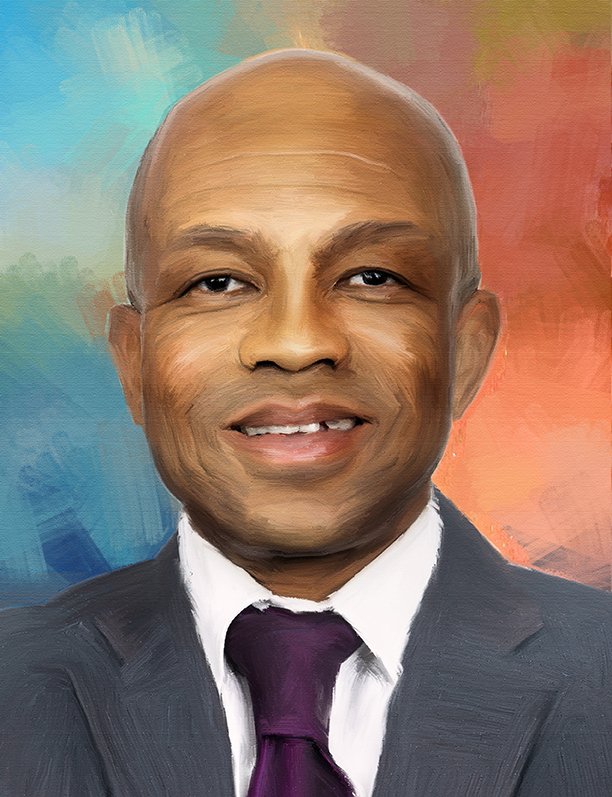
Sipho Mosai has been the Group Chief Executive of Rand Water since 2019. Before that, Mosai was Rand Water’s Chief Operations Officer for 10 years. Mosai, a scientist by training turned strategist and business leader in the water sector, boasts over 20 years executive management and technical experience in bulk and distribution water operations; water infrastructure planning, maintenance, refurbishment, and upgrade; project management, scientific services, strategic asset management; and sector growth and development.
Mosai has served as a non-executive and board member in various institutions. This includes serving on the Construction Industry Development Board (CIDB), where he chaired the Human Resources Subcommittee of the board in his first term and the chairperson of the Audit and Risk Committee in his second term. He currently serves on the boards of the Rand Water Foundation and Rand Water Services as a non-executive director.
Mosai holds the following qualifications:
Bachelor of Science (University of the North)
Bachelor of Science (Hons) (University of the North)
Master of Science (University of Free State)
Post Graduate Diploma in Management (University of KwaZulu-Natal)
Master of Business Administration (University of KwaZulu-Natal)
The numbers behind Zuikerbosch’s
Station 5A
871 jobs created since 2019 (across unskilled, semi-skilled, and skilled levels).
2 140 beneficiaries trained in construction trades (steel fixing, bricklaying, welding, electrical).
R26.8 million in total training investment
48 SMMEs awarded work packages totalling R177.7 million
34 institutions (including ECDs and NGOs) supported
R10.4 million in CSR spend