

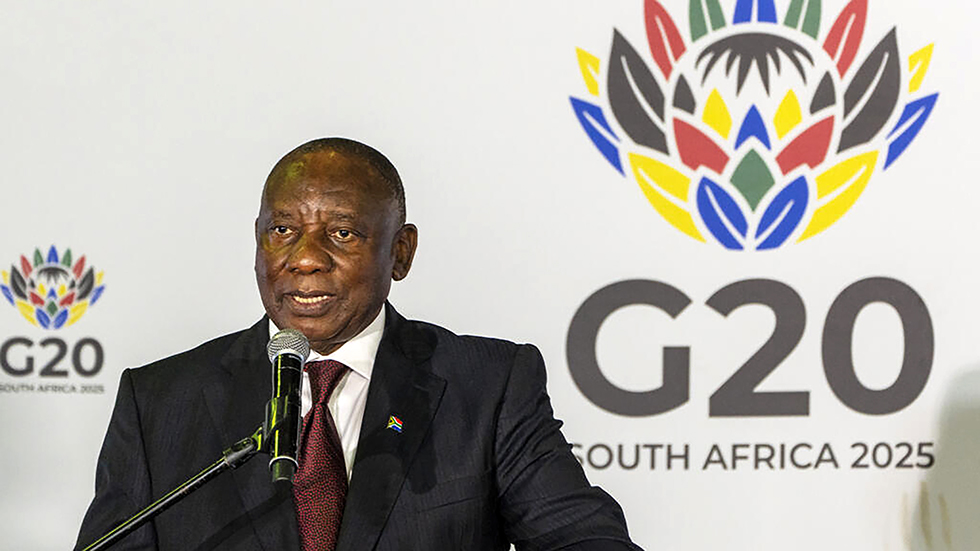
South Africa, under President Cyril Ramaphosa’s leadership during its 2025 G20 Presidency, has catalyzed a profound shift in global governance by championing a new form of multilateralism firmly anchored in the interests of the Global South, with a particular focus on Africa.
A ligning closely with the African Union’s Agenda 2063, South Africa pushed for transformative reforms in global institutions to enhance representation and responsiveness to the development needs of emerging economies. The Presidency’s guiding theme, “Solidarity, Equality, Sustainability,” underscores the commitment to inclusive growth, the reduction of inequality, climate justice, and economic empowerment for Africa and other Global South nations.
Positioning Africa’s developmental agenda at the apex of the global policy conversation, South Africa harnessed the G20 platform to spotlight critical priorities such as infrastructure development, regional economic integration—primarily through the African Continental Free Trade Area (AfCFTA)—and the empowerment of marginalized populations. Crucially, South Africa collaborated closely with the African Union, which attained formal G20 membership during this period, ensuring African perspectives were not only heard but integrated throughout the G20’s deliberations. This cooperation highlighted pressing challenges like poverty, unemployment, inequality, climate change, energy transitions, food security, and debt sustainability—issues that disproportionately burden the continent.
A cornerstone of South Africa’s Presidency has been a concerted push to reform global governance and multilateral financial institutions with the express purpose of better serving sustainable development in the Global South. This included proactive efforts to mobilize financing for the just energy transition, advocating for a significant increase in both the quantity and quality of climate finance, strengthening resilience to natural disasters, and pressing for equitable trade rules coupled with accessible development finance. These reforms are designed to equip developing nations with the necessary tools and resources to nurture sustainable economic growth and foster resilience against emerging shocks.
By leveraging the G20’s powerful diplomatic stage, South Africa not only marked an international milestone but also strategically addressed historic bottlenecks thwarting African regional integration and economic progression. The Presidency facilitated critical policy commitments aimed at accelerating continental integration and supporting structural economic transformation in line with the African Union’s long-term vision embodied in “The Africa We Want.”
Among its notable achievements, South Africa secured key commitments to significantly increase both the quality and volume of climate finance flowing to developing countries, with Africa as a primary beneficiary. These include mobilizing considerable public and private capital investments in renewable energy expansion, climate resilience, and nature-based solutions. Through stewardship of country-led platforms like South Africa’s own Just Energy Transition Partnership (JETP)—which secured approximately R147.26 billion (about $8.5 billion)—the Presidency exemplified how tailored financing better aligns with national development priorities and contexts.
Additionally, the Presidency concentrated on enhancing the operational capacity of multilateral development banks (MDBs) and reforming global financial architecture to increase access to concessional financing and crisis-resilient debt instruments. South Africa’s leadership was instrumental in strengthening the Common Framework for debt treatment, emphasizing creditor transparency and championing reforms at the International Monetary Fund and the World Bank. One landmark achievement is the creation of a dedicated 25th seat for Sub-Saharan Africa on the IMF Executive Board—significantly amplifying African representation in key financial governance structures.
Overall, South Africa’s 2025 G20 Presidency represents a seismic paradigm shift in multilateralism—one rooted in solidarity with the Global South and underpinned by reparative justice at home. It serves as a blueprint for how visionary diplomacy and courageous domestic governance can converge to construct a sustainable and equitable global future.
In its dual capacity as a global norm-shaper and a domestic reformer, South Africa has charted an unprecedented trajectory that unites international cooperation with a commitment to redressing entrenched inequalities. The G20 leadership has transcended mere diplomatic symbolism, emerging instead as a clarion call to action—aligning the aspirations of the Global South with South Africa’s imperative to dismantle systemic inequities.
To fully realise this vision, it is imperative that African countries collectively rise to the challenge and leverage the gains made under South Africa’s Presidency. This includes:
Strengthening regional coordination through the African Union and regional economic communities to translate the G20 commitments into concrete programmes, particularly in climate finance mobilization and the development of sustainable infrastructure.
Expanding the implementation of country-led climate initiatives such as the Just Energy Transition Partnerships (JETPs), replicating South Africa’s successful model and forging new partnerships calibrated to individual national priorities.
Enhancing engagement between public and private sectors to unlock trillions in climate finance and investment, employing innovative financial instruments like debt-for-climate swaps and blended finance mechanisms.
Actively participating in ongoing G20 working groups and forums, ensuring African experts and policymakers are fully involved in follow-up processes to guarantee accountability and the effective execution of climate finance commitments.
Advocating robustly for the continuation of MDB reforms within the G20 framework to increase concessional finance access, enhance debt sustainability instruments, and build resilient financial systems tailored to African development challenges.
These strategic steps will enable African nations to maximize the developmental and climate resilience opportunities unlocked through South Africa’s visionary G20 leadership, galvanizing international support in harmony with continental aspirations for inclusive and sustainable growth.
This moment in history beckons Africa to ride the crest of global influence and deliver on the promise of inclusive development articulated by the G20. The eyes of the world—especially those of the Global South—are fixed keenly on Africa’s unfolding journey toward a reimagined global economic order, where justice, equality, and shared prosperity take pride of place. The ball is squarely in the continent’s court, as it confronts the critical test of translating G20 commitments into actionable policy reforms that challenge the persistent drivers of underdevelopment.
In forging ahead, Africa must not only harness its newfound diplomatic capital but also cultivate the institutional strength, political will, and innovative financing needed to underpin sustainable transformation. South Africa’s Presidency may have laid the groundwork, but it is the collective endeavor of African states, multilateral partners, civil society, and the private sector that will determine whether this historic opportunity becomes a lasting legacy of prosperity and equity for the continent.
