
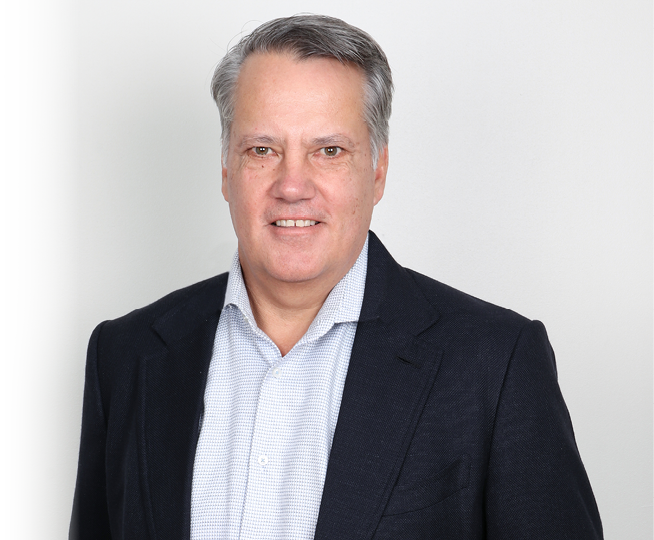

With demand for rare earth minerals soaring, African nations are striving to move beyond extraction and unlock greater value through refining and industrial investment, writes Derrick Roper, the co-founder of Novare Holdings and MD of its private equity division.
Africa is home to many of the minerals that will power the global clean energy transition. But unless the continent shows a sense of urgency to move quickly up the value chain, it risks repeating the mistakes of past resource booms.
The shift away from fossil fuels presents nations with a rare opportunity to escape the extractive trap and capture greater value from the surging demand for critical minerals.
Yet the foundations needed to swiftly seize this moment – skills, infrastructure, and regulatory certainty – are all areas that are slow to build and slower to reform.
Without urgent, coordinated action with the private sector, history could once again leave ordinary people behind.
Demand for critical minerals continues to rise, despite President Donald Trump’s rollback of US green energy policies. According to the International Energy Agency’s Global Critical Minerals Outlook 2025, the market value of copper, lithium, nickel, cobalt, graphite and rare earth elements could double by 2040.
Africa holds some of the richest deposits. The Democratic Republic of Congo (DRC) produces more than 70% of the world’s cobalt. South Africa holds roughly 80% of global manganese reserves and supplies vanadium and platinum group metals. Zimbabwe has large lithium resources, while Namibia, Tanzania and Malawi are advancing rare earth projects.
Yet Africa captures only a sliver of the value. For decades, the continent’s role has been limited to digging up ore, shipping it out, and importing finished products at a premium.
According to the African Development Bank (AfDB), countries that export raw minerals capture less than 10% of the value of the final product. With investment in refining and beneficiation, that figure could rise to 40%–50%, depending on the mineral.
What’s at stake isn’t just revenue. It’s industrial development, job creation and economic sovereignty. It’s also about preventing a scenario where governments bear the environmental and social costs left behind by mining companies, without a meaningful return.
A geopolitical shift
As Western governments seek to “de-risk” supply chains away from China, African producers have a gap to renegotiate their role.
China controls nearly 90% of the global rare earth processing market. In 2023, Beijing restricted exports of gallium and germanium – two metals used in advanced manufacturing – raising alarm in Washington and Brussels. Trump’s earlier trade war had already exposed US vulnerabilities in the supply of minerals critical to solar panels, batteries and defence systems.
Some African governments are stepping up to benefit. Namibia and Zimbabwe have banned exports of unprocessed lithium. Zimbabwe also announced a $2.8bn battery manufacturing venture with China’s Zhejiang Huayou Cobalt. In South Africa, the Industrial Development Corporation invested R3.5bn in the Kalagadi Manganese Project in the Northern Cape, which includes on-site alloy and sinter refining.
Across the continent, eight rare earth projects – including Phalaborwa and Steenkampskraal (South Africa), Makuutu (Uganda), Ngualla (Tanzania) and Songwe (Malawi) – were on track for commissioning by early 2025. Benchmark Mineral Intelligence forecasts that these projects could lift Africa’s share of global rare earth output to 9% by 2029.
Namibia’s Lofdal project has completed a production pilot, and Angola’s Longonjo mine, backed by an $80m loan from Absa, aims to supply 5% of global magnet-metal demand. The DRC has signed agreements with the US and EU to develop downstream capacity. But progress remains slow, constrained by infrastructure and governance gaps.
Changing the nature of deals
Africa’s beneficiation push is beginning to attract institutional capital and changing how deals are structured globally.
Novare’s recent commitment to anchor a $150m (R2.8bn) funding round for American Resources Corporation via an investment in ReElement Technologies reflects that shift. While the project expands ReElement’s refining operations in Indiana, it also signals our intent to claim Africa’s place in the global supply chain – not just as a source of raw materials, but as a stakeholder in high-value refining.
ReElement’s modular, environmentally sustainable refining technology is well-suited to African markets, where grid-scale power is limited and environmental regulations are evolving. It offers a pathway for scalable beneficiation that doesn’t rely solely on mega-infrastructure.
Africa is also attracting high-profile backers. Jeff Bezos and Bill Gates have invested $537m in KoBold Metals, which is exploring African mineral deposits using artificial intelligence.
Still, severe constraints remain. Processing plants require a large upfront investment and long lead times. The electricity supply is unreliable. Transport infrastructure is poor. And regulatory frameworks remain patchy.
Labour organisations have warned that without proper oversight, the critical minerals boom could repeat past cycles of exploitation. Research by IndustriALL Global Union indicates that formalising artisanal and small-scale mining in countries such as the DRC and Zimbabwe could boost productivity and safeguard workers, turning extractive growth into sustainable employment.
Drawing on proposals from the AfDB, the African Union, SADC, and leading global think tanks, African governments should take five urgent steps: invest in core infrastructure, ensure regulatory clarity on royalties and licensing, foster technology partnerships, develop skills pipelines, and enforce beneficiation clauses in mining contracts.
The African Continental Free Trade Area (AfCFTA), which aims to unify trade across 54 countries, could serve as a powerful catalyst. Lithium mined in Namibia could be refined in South Africa and then processed into batteries in Kenya – if harmonised trade rules and cross-border logistics can keep pace.
A turning point
Africa has been here before. Past commodity booms – whether in copper, oil, or gold – often ended in busts, were captured by political elites, or resulted in missed opportunities.
But this time is different. The global demand for energy transition minerals isn’t a temporary spike – it’s a structural shift that will shape the next several decades.
The prize is not just higher revenues. It’s a seat at the table in shaping the global green economy.
For African leaders and investors, the goal must be to shift from being price takers to value creators: from extraction to refining, manufacturing, and achieving global competitiveness.
The upcoming G20 Summit in South Africa – the first to be hosted on the continent – highlights Africa’s growing strategic significance. It’s a chance to push for fairer terms in the clean energy transition, including investment in beneficiation and secure, transparent partnerships.
Africa holds what the world wants. The real question is: can we rise to the occasion?
By Derrick Roper