
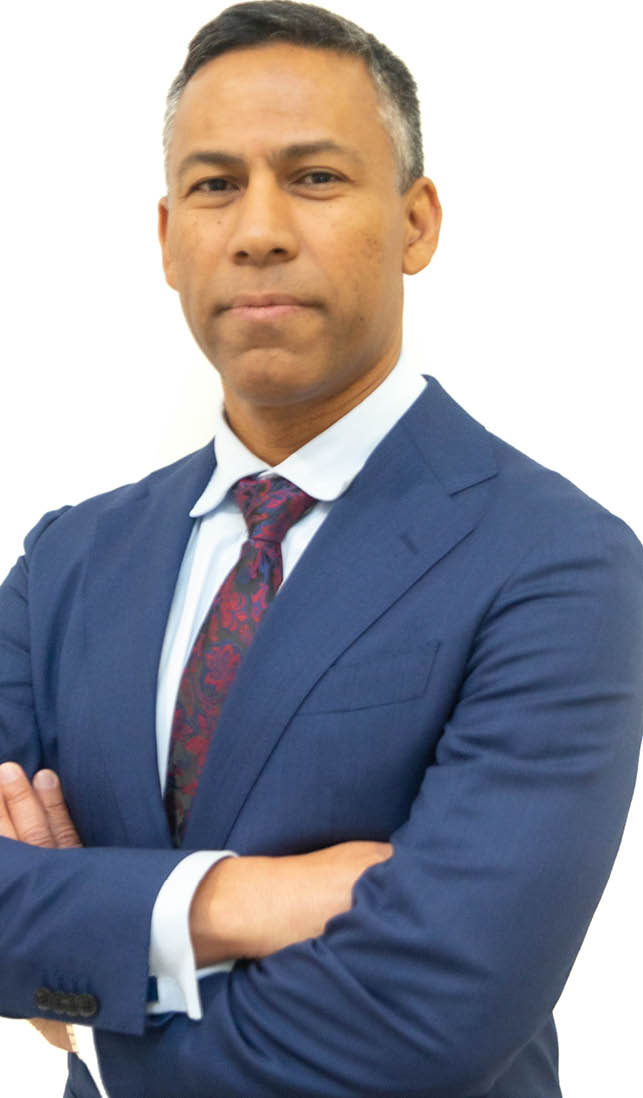
A Vision for South Africa’s Sustainable Nuclear Future with Riedewaan Bakardien, CEO of National Radioactive Waste Disposal Institute
In a country boldly shaping its energy future while navigating the delicate balance between development and sustainability, leadership in nuclear governance is not for the faint-hearted. It requires vision. It demands precision. It calls for courage.
At the helm of the National Radioactive Waste Disposal Institute (NRWDI) stands Riedewaan Bakardien, a leader steering one of South Africa’s most critical yet often misunderstood institutions.
In a world where innovation must walk hand-in-hand with regulation and where safety is non-negotiable, his stewardship signals a new era of responsible nuclear management grounded in transformation and national progress.
A Journey Rooted in Purpose
Every impactful leader carries a journey that shapes their mission. For Mr. Bakardien, stepping into the role of CEO at NRWDI was not merely a career move—it was a calling aligned with South Africa’s long-term sustainability agenda.
Taking the reins at a pivotal time for the country’s nuclear landscape, he understood the weight of responsibility. Radioactive waste management is not simply about storage; it is about safeguarding generations to come. It is about building systems today that will protect communities’ decades from now.
His journey reflects a deep commitment to public service, technical excellence, and ethical governance. In many ways, his leadership represents the quiet but powerful work of nation-building—work that may not always dominate headlines but underpins the structural integrity of our energy and environmental systems.
Understanding NRWDI’s Mandate
The National Radioactive Waste Disposal Institute was established to manage and dispose of radioactive waste safely and sustainably on behalf of the South African state. Its mandate is clear: protect people, protect the environment, and ensure that radioactive waste is handled with the highest standards of safety and compliance.
South Africa’s nuclear program, including its medical, industrial, and research applications, generates radioactive waste that must be responsibly managed. NRWDI ensures that this waste does not pose risks to communities or ecosystems.
The CISF programme is advancing well, with the Environmental Impact Assessment (EIA) and design work currently underway as part of the preparatory activities for the licensing and construction of the facility.
The work of NRWDI in the next few years will be particularly important in context of the life extension of the Koeberg Nuclear Power Station, which involved the replacement of major reactor components. Safe and responsible solutions for disposal of these components form a vital element of the broader national nuclear programme.
Safety Above All
In the nuclear sector, safety is not an option; it is the foundation. Environmental protection and public health are paramount to NRWDI’s operations.
The Institute implements rigorous waste characterization processes, secure containment systems, and internationally aligned disposal practices. Every step – from waste acceptance to final disposal – follows stringent safety protocols designed to minimize risk and ensure long-term stability.
Comprehensive environmental monitoring systems are in place to assess soil, water, and air quality. Risk assessments are continuous, not periodic. The philosophy is proactive rather than reactive—preventing potential hazards before they emerge.
At BBQ Magazine, we often speak about excellence. In this space, excellence means zero compromise on safety. It means building public trust through transparency and accountability.
Innovation in Nuclear Waste Management
Innovation is often associated with fast-moving industries such as technology or finance. Yet innovation in nuclear waste management is equally critical—and perhaps even more consequential.
Under Mr. Bakardien’s leadership, NRWDI is exploring advanced disposal technologies, improved waste conditioning methods, and enhanced monitoring systems powered by data-driven insights. Modernisation is not about change for its own sake; it is about increasing efficiency, improving safety margins, and ensuring long-term sustainability.
Digitisation plays a key role in operational management, enabling better record-keeping, predictive maintenance, and real-time tracking of waste streams. By integrating global best practices and adapting them to local realities, NRWDI is positioning South Africa as a responsible player in the global nuclear ecosystem.
Innovation here is deliberate, cautious, and evidence-based—a model of progress respecting the gravity of the sector it serves.
Driving Transformation & Skills Development
Transformation is not a slogan—it is a structural imperative. In a country shaped by inequality, institutions like NRWDI have a responsibility to open doors and cultivate new talent.
Mr. Bakardien emphasises skills development as a cornerstone of long-term sustainability. The nuclear sector requires specialized expertise. Building local capacity is essential to reducing reliance on external skills while empowering South African professionals.
Through internships, graduate development programmes, and partnerships with academic institutions, NRWDI is nurturing a pipeline of young engineers, scientists, and environmental specialists, many from previously disadvantaged backgrounds.
This approach aligns with South Africa’s broader transformation agenda: ensuring that high-tech sectors are not exclusive but inclusive. Empowerment in the nuclear space translates into economic participation, career mobility, and knowledge transfer that strengthens the national skills base.
Balancing Compliance, Safety & Innovation
Leadership in a regulatory-heavy environment requires balance. Too much rigidity stifles progress; too much risk-taking compromises safety. The art lies in harmonizing compliance with forward-thinking development.
Mr. Bakardien’s approach reflects strategic equilibrium. Regulatory frameworks are treated as guardrails, not obstacles. Safety protocols are integrated into innovation processes rather than appended at the end.
This balance requires collaborative leadership—engaging regulators, scientists, engineers, policymakers, and communities in structured dialogue. Decision-making is informed by data, expert consultation, and long-term impact analysis. The result is a governance model that is both resilient and adaptive— capable of evolving with technological advancements while remaining anchored in statutory obligations.
Global Collaboration in a Shared Responsibility
South Africa is part of a global nuclear community where knowledge exchange is essential. Radioactive waste management is a shared responsibility across borders, and international collaboration strengthens national systems.
NRWDI engages with global institutions, research bodies, and peer organizations to adopt best practices and share insights. Learning from international experiences enhances local strategies and ensures alignment with global safety standards.
This collaboration positions SA not merely as a participant but as a contributor in shaping responsible nuclear governance worldwide. In a globalised world, isolation is not an option. Excellence requires openness to learning and a willingness to benchmark against the highest international standards.
Infrastructure for the Future
Infrastructure development is central to sustainability. Safe disposal requires facilities that are secure, technologically advanced, and designed for long-term containment.
NRWDI’s forward-looking plans include modernizing existing infrastructure and evaluating potential expansion projects to meet future waste management needs. These initiatives are guided by scientific research, environmental impact assessments, and stakeholder consultation. Long-term planning in this sector spans decades, not electoral cycles. It demands patience, precision, and unwavering commitment to public interest.
Investment in infrastructure is not just about physical structures; it is about building institutional longevity and operational resilience.
Building Public Trust
Perhaps the most delicate aspect of radioactive waste management is public perception. Fear often fills the vacuum where information is lacking. NRWDI understands that transparency is critical. Community engagement initiatives, stakeholder consultations, and open communication channels help demystify nuclear waste management.
By providing clear, accessible information about safety measures and environmental safeguards, the Institute fosters confidence rather than suspicion. Trust is earned through consistency, integrity, and openness. In sectors dealing with invisible risks, credibility becomes the most valuable currency.
The Road Ahead: A 5–10 Year Vision
Looking ahead, Mr. Bakardien’s goals for NRWDI are anchored in sustainability, innovation, and national impact.
Over the next decade, the Institute aims to:
Strengthen its technological capabilities and operational efficiency.
Expand local expertise through robust skills development initiatives.
Enhance environmental stewardship through advanced monitoring systems.
Deepen international collaboration to remain aligned with evolving global standards.
Build stronger community partnerships to reinforce public trust.
Ultimately, the vision is clear: a South Africa where radioactive waste is managed with excellence, foresight, and unwavering commitment to safety.
At BBQ Magazine, we celebrate leaders who operate in complex spaces with clarity and conviction. Riedewaan Bakardien represents a form of leadership that is disciplined yet visionary grounded in regulation but inspired by transformation.
In the quiet corridors of nuclear governance, where decisions shape the future long after headlines fade, leadership matters profoundly. And in that space, innovation is not noise it is responsibility.