
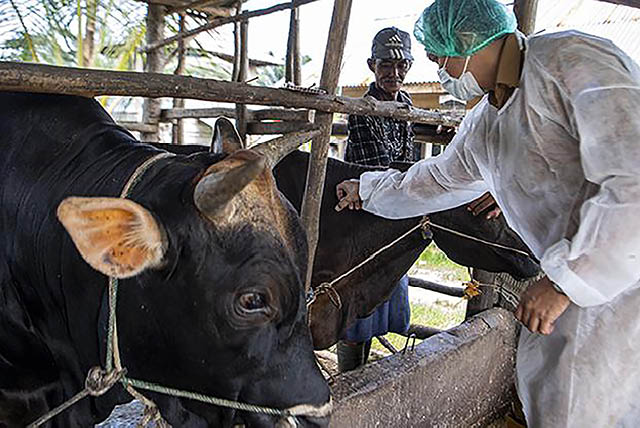
Mbali Nwoko explores the current Foot-and-Mouth Disease chaos and the fight for South Africa’s livestock future.
South Africa’s cattle herd – over 12 million strong – is under siege. Foot-and-Mouth Disease has moved from a regional inconvenience to a national agricultural crisis, and the economic, social, and food security consequences are mounting with every passing month.
For anyone connected to South Africa’s agricultural landscape—whether you are a commercial beef producer in the Free State, a dairy farmer in the KwaZulu-Natal Midlands, a smallholder in Limpopo, or a consumer pushing your trolley through a supermarket aisle—Foot-and-Mouth Disease (FMD) is no longer a distant threat. It has arrived, and it is reshaping the very fabric of our livestock industry.
This article is written not to alarm, but to inform. Understanding what FMD is, how it spreads, what has been done to fight it, and crucially, what more must be done, is essential for every South African who cares about food security, agricultural sustainability, and economic resilience.

What is Foot-and-Mouth Disease?
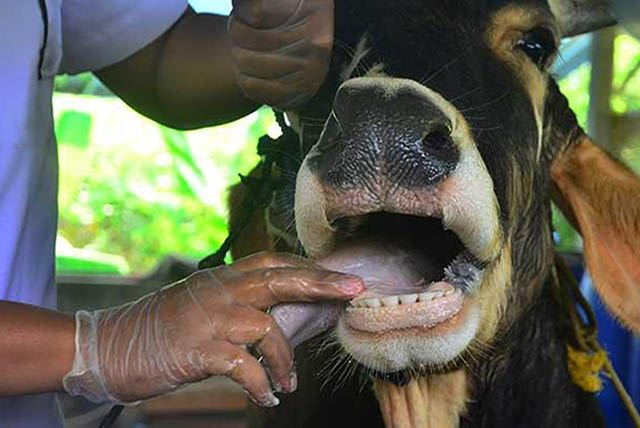
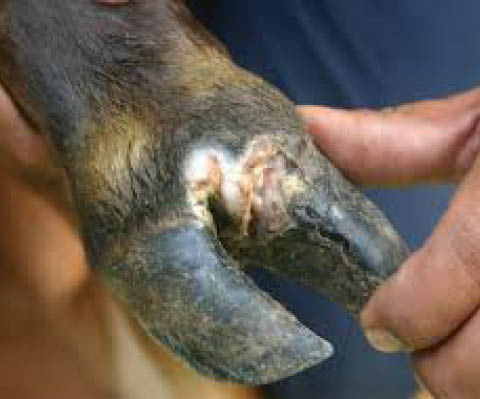
Foot-and-Mouth Disease is one of the most contagious viral infections known to affect cloven-hoofed animals. Caused by an RNA virus of the genus Aphthovirus, it affects cattle, pigs, sheep, goats, buffalo, and a range of wildlife species. Critically, it does not affect humans – meat and dairy products from FMD-affected farms remain safe for human consumption – but its economic devastation to livestock farming is virtually unparalleled.
The disease presents in three SAT (Southern African Territories) serotypes that are particularly relevant to South Africa: SAT 1, SAT 2, and SAT 3. These African serotypes are notoriously complex because they frequently cause mild or sub-clinical infections – animals carry and shed the virus without displaying obvious symptoms. This makes early detection extraordinarily difficult and containment a serious challenge. Dairy cattle, however, are an exception: they develop severe, debilitating lesions that cause dramatic drops in milk production.
In practical terms, the virus spreads through direct animal contact, contaminated equipment and vehicles, the movement of animals through auctions and livestock markets, and even through wildlife corridors. South Africa’s buffalo populations in the Kruger National Park and in five game reserves in KwaZulu-Natal serve as permanent reservoir hosts—animals that carry the virus without showing disease—creating a constant re-infection risk that complicates any long-term eradication strategy.
South Africa lost its FMD-free status with the World Organisation for Animal Health (WOAH) in 2019. The current wave of outbreaks dates back to 2021–2022, when animals moved from Phalaborwa in Limpopo to KwaZulu-Natal, igniting what has since become the most widespread outbreak in the country’s recorded history. By 2022, six of nine provinces had reported cases – a first in South African agricultural history.
The Toll: Losses Too Large to Ignore
The numbers tell a sobering story. Across the affected provinces – KwaZulu-Natal, Gauteng, North West, Mpumalanga, Free State, and most recently the Eastern Cape and Western Cape – hundreds of farms have been placed under quarantine. Hundreds of thousands of animals have been vaccinated under emergency protocols. In the Eastern Cape alone, over 144 000 cattle were vaccinated in response to the 2024 DMA outbreak, with 76 farms remaining under quarantine even after disease management areas were partially lifted in July 2025.
The financial toll on farmers has been catastrophic. Slaughter volumes have dropped sharply, as has the average carcass weight of animals reaching abattoirs—both direct consequences of disease stress and disrupted farming cycles. Auction markets have been repeatedly suspended, cutting off the primary income stream for thousands of communal and small-scale farmers who depend on them for their livelihoods. In communities where cattle represent not just income but also cultural wealth and social capital, the impact is profound.
South Africa’s beef exports – a key revenue driver and a signal of the sector’s health – fell by 16% in 2022 to approximately 26 881 tonnes, according to Trade Map data, as export markets imposed temporary bans in response to the outbreak. Wool exports dropped 19% that same year, with China suspending imports from South Africa. The sheep and mohair industries, while not directly infected, suffered significant collateral damage. A modest recovery followed in 2023, but the ongoing 2025 outbreaks – extending now into feedlots and sparking panic buying among consumers—have reversed much of that progress.
In late 2025, the announcement of major feedlot outbreaks triggered retail-level panic buying that pushed meat price inflation sharply upward before it eventually eased. Consumer food price inflation in South Africa remained elevated through much of 2025, with meat cited as a key upward driver—even as overall food inflation was otherwise slowing.
Vaccines: The Central Battleground
The single most urgent operational challenge in the FMD response has been vaccine access. South Africa has historically relied almost entirely on imports from Botswana to supply its FMD vaccination needs – a dependency that has proven deeply inadequate for the scale of the current crisis. Vaccinating a national herd exceeding 12 million cattle across 234 municipalities requires not just millions of doses, but a diversified, reliable, and rapidly deployable supply chain.
Three vaccine candidates are currently central to the national response. The BVI vaccine has been in use as the primary available option, but supply has been limited. The Dollvet vaccine, sourced from a Turkish manufacturer via the South African agent Dunevax, received Section 21 SAHPRA approval and approximately 1.5 million doses were confirmed for delivery in mid-February 2026. However, early VNT (Virus Neutralisation Test) results found it to be unprotected for SAT 2 and SAT 3 serotypes – a significant scientific concern that underscores the importance of mandatory vaccine-matching before mass deployment.
The most promising new entrant is the Biogenesis Bago BIOAFTOGEN vaccine, developed by an Argentine biotechnology company with a formidable track record – registered in 35 countries and produced at 300 million doses annually. The company has agreed to formulate a trivalent vaccine specifically covering SAT 1, 2, and 3 for South African conditions, with an initial batch of 1 million doses deliverable within 40 days of order confirmation, and an additional 5 million doses available by March 2026. Critically, Biogenesis Bago has offered a performance guarantee under South African conditions. Post-vaccination sera matching through the ARC-OVR and the WOAH World Reference Laboratory at the Pirbright Institute in the UK was expected to be completed by mid-February 2026.
The Department of Agriculture has outlined a clear hierarchy for vaccine deployment: feedlots and incoming cattle take Priority 1, followed by large commercial dairy herds and export-oriented operations. Mass preventive campaigns in high-risk districts are planned on a biannual basis, with an emergency ring-vaccination protocol triggered whenever a confirmed outbreak is detected within a defined epidemiological radius. Critically, as of early March 2026, the Minister of Agriculture confirmed that the government will cover the full cost of vaccinating the national herd, removing the financial barrier for farmers participating in the national rollout.
Confirmed by Prof. Francois Maree (Virologist, University of Pretoria): Mixing different inactivated FMD vaccines is safe and does not reduce protection. A heterologous prime-boost strategy – sometimes called ‘mix and match’ – may in fact strengthen and broaden immune response.
How South Africa Compares to the World
Perhaps the most instructive lens through which to view South Africa’s FMD crisis is a comparative one. How have other countries navigated similar challenges—and what have they done better?
Argentina and Brazil: The Gold Standard
Argentina and Brazil offer the most directly applicable model. Both countries once had endemic FMD problems that devastated their livestock sectors and closed export markets. In the 1980s and 1990s, both nations embarked on sustained national vaccination programmes—mass, systematic, government-funded vaccination campaigns across entire national herds—combined with rigorous movement controls and traceability systems. The result: Argentina has been recognised as FMD-free with vaccination, and Brazil has progressively expanded its FMD-free zones. Crucially, both countries built domestic vaccine manufacturing capacity, reducing dependency on imported vaccines. The very same Biogenesis Bago now being considered for South Africa was a key weapon in the South American eradication arsenal.
Uruguay: Speed and Traceability
Uruguay’s cattle traceability system is widely regarded as one of the most sophisticated in the world. Every animal is individually tagged and tracked from birth to slaughter using electronic identification. When an FMD outbreak occurred in 2001, Uruguay’s traceability infrastructure allowed authorities to rapidly identify and isolate infected herds, contain the outbreak faster than most of its neighbours, and restore export market access in record time. South Africa’s lack of universal electronic animal identification—a known gap explicitly flagged in the government’s mass vaccination proposal—remains a critical weakness.
The United Kingdom: Decisive Stamping Out
The UK’s 2001 FMD outbreak resulted in the slaughter of approximately 6.5 million animals and cost the economy an estimated GBP 8 billion. The response was brutal but decisive: mass culling, strict movement controls, and eventual vaccination in buffer zones. What the UK learned—and has since institutionalised—is the need for pre-positioned emergency response plans, rapid diagnostic capacity, and clear legal frameworks that allow for swift action without bureaucratic delay. South Africa’s public veterinary sector faces a 47% vacancy rate, inadequate diagnostic infrastructure, and procurement bottlenecks that have repeatedly slowed vaccine access.
Botswana: Managing the Wildlife Interface
Botswana faces a similar buffalo-livestock interface problem to South Africa, with its Okavango ecosystem home to large wildlife populations. Botswana’s response has centred on maintaining strictly enforced veterinary cordon fences — physical barriers separating wildlife zones from livestock farming areas—combined with regular vaccination programmes. The fences are far from perfect, but they have allowed Botswana to maintain FMD-free zones that support its beef export trade. South Africa has been slow to invest in equivalent physical and biosecurity infrastructure along its wildlife corridors.
Industry Response: A Coordinated Effort
One of the more encouraging developments in the South African FMD crisis has been the mobilisation of organised agriculture and industry bodies alongside government response structures.
Red Meat Industry Services (RMIS) was among the first to act decisively, establishing a centralised Operational Centre in June 2025, led by a designated RMIS veterinarian and supported by a dedicated FMD Working Group. The OC’s mandate included developing a structured, time-bound response framework, evaluating the government’s contingency plan, initiating a local vaccine production strategy, and creating an electronic movement permit system. RMIS CEO Dewald Olivier described it as a defining moment for the red meat industry: an acknowledgement that coordinated industry leadership was essential alongside government.
The FMD Industry Coordination Council (ICC), formally appointed in January 2026 by the Minister of Agriculture, has since served as the high-level industry-government interface, providing strategic direction alongside the Ministerial Task Team (MTT). The ICC has prioritised alignment between national and provincial response measures, pushed for a national dashboard to track vaccine rollout progress per province, and advocated for a single official communication channel to reduce confusion among producers. As of early March 2026, the ICC was pressing for faster Section 9 movement permit clarity, finalising Section 10 schemes for pre-emptive vaccination involving private veterinarians, and escalating calls for a 24-hour SAHPRA turnaround time on Section 21 applications.
The Agricultural Business Chamber (Agbiz), through its active participation on the ICC, has been pushing for greater private sector involvement in regulated areas including vaccine procurement, vaccination operations, and movement controls. Its February 2026 Donor Briefing Note coordinated industry contributions in three categories: products (PPE, disinfectants, cattle handling equipment), services (waste disposal, accommodation for field teams, cold storage support), and capacity (data capture, sponsorship of animal health technicians).
Organised agriculture bodies including Agri SA have been vocally engaged in parliamentary processes, while the South African Stud Breeders’ Society and other commodity associations continue to press for faster, more transparent rollout plans that protect the genetic integrity and commercial viability of their members’ operations.
Prevention: What Farmers Must Do Now
While the government and industry work through the systemic response, individual farmers cannot afford to wait. Biosecurity at farm level remains the single most effective tool available right now. Based on the Department of Agriculture’s guidelines and best practice, every livestock farmer should immediately implement the following:
Limit animal movement as much as possible. Only move cloven-hoofed animals when absolutely necessary, and always with a signed health declaration from the origin farm.
Maintain a strict 28-day quarantine for all newly introduced animals, keeping them completely separate from resident herds.
Prevent nose-to-nose contact between your animals and those outside your property boundaries.
Control all access to your farm. Require visitors and vehicles to use clean clothing and undergo thorough disinfection—including tyre washing—before entering your property.
Report any suspicious symptoms immediately. Salivation, mouth blisters, limping, and hoof lesions are the classic signs. Do not move any suspected animal. Contact your State Veterinarian without delay.
Register your herd with your provincial veterinary services if you have not already done so, and ensure all animal identification is current and traceable.
Contact your nearest state or private veterinarian to arrange vaccination under the national rollout programme. Government is covering vaccine costs for the national herd—take advantage of this.
Stay informed. Use official ICC, RMIS, and Department of Agriculture communication channels for verified updates, not social media speculation.
The Consumer Dimension: What FMD Means at the Dinner Table
For South African consumers, FMD’s impact has been felt most acutely in the meat aisle. The combination of reduced slaughter volumes, auction suspensions, and retailer panic announcements in late 2025 drove beef prices sharply upward—even though the underlying product remained perfectly safe to eat. This is a critical point: meat from FMD-affected farms is safe for human consumption. The disease does not transfer to humans, and properly processed beef, lamb, and pork from even quarantine-affected farms poses no health risk.
The good news for consumers is that substitute proteins have stepped in to fill the gap. Higher beef prices triggered by FMD disruptions have supported price increases in pork and poultry, as substitution effects played out across the market. But crucially, the poultry and pork industries—with their shorter production cycles—have the capacity to expand supply faster than beef can recover, and both benefit from the better feed costs that have followed South Africa’s exceptional 2024/25 grain harvest of over 20 million tonnes.
In practical terms, South African consumers facing elevated beef prices might consider the following alternatives: chicken (still the most affordable protein in South Africa’s basket and benefiting from ample maize supply), pork (increasingly competitive in price and nutritionally comparable to beef), lamb and mutton from sheep producers, who were less directly affected by the current FMD wave, and plant-based proteins, legumes, and eggs, which offer excellent nutritional value at lower cost.
The longer-term consumer concern is what happens if the livestock sector does not recover. South Africa’s livestock and poultry industries account for nearly half of agriculture’s gross value added. A sustained collapse in the cattle sector would have cascading effects on food security, rural employment, the informal economy, and the country’s agricultural export ambitions.
The Road Ahead: Optimism Built on Realism
The Department of Agriculture’s mass vaccination proposal sets out a credible, if ambitious, pathway. Its four-phase strategy—Stabilisation (Years 1–2), Consolidation (Years 2–4), Vaccination Withdrawal in Free Zones (Years 4–7), and National Freedom (Years 7–10)—follows the WOAH-endorsed Progressive Control Pathway for FMD. The targets are demanding: a 70% reduction in outbreak incidence in priority zones within 24 months, 80% vaccination coverage of targeted cattle populations, and 90% coverage in feedlots and dairies.
Meeting these targets requires urgent action on multiple fronts: diversifying and securing vaccine supply, expanding public and private veterinary capacity, implementing a national digital movement permit system, strengthening laboratory diagnostic infrastructure, and addressing the critical gap in animal traceability through phased mandatory electronic identification. Legislative amendments to the Animal Diseases Act are also needed to create explicit animal health emergency powers and streamline emergency procurement.
None of this is simple. But the alternative—allowing FMD to become permanently endemic in South Africa’s livestock sector—is economically and socially unacceptable. Argentina and Brazil took decades to bring their outbreaks under control, and the investment was substantial. South Africa must commit to the same sustained, strategic effort.
The cattle industry is a pillar of South Africa’s farming economy—and its challenges, over time, may start to show in the sector’s long-term performance and the inclusivity programmes that depend on it. The time to act is now.
South Africa’s livestock farmers are resilient. The country’s agricultural sector has demonstrated time and again its capacity to recover from adversity. But resilience is not unlimited, and it cannot substitute for the urgent, coordinated, and adequately funded government response that this crisis demands. Industry is ready to help. The tools are available. The question is whether the will—and the speed—will match the scale of the challenge.
The war against Foot-and-Mouth Disease is not yet lost. But it will not be won without a step-change in urgency, investment, and collective action from every stakeholder in South Africa’s agricultural value chain.
Mbali Nwoko is a keynote speaker, columnist and agri entrepreneur