
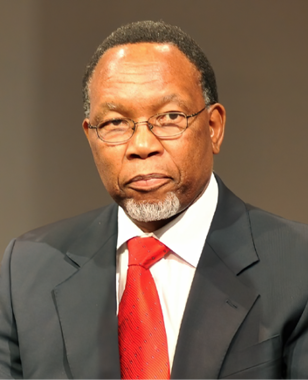
Former President Kgalema Motlanthe reflects on the legacy of June 16 and the responsibility of today’s generation, writes Nasiphi Ndevu
Fifty years after the Soweto Uprising, the story of 16 June 1976 remains one of the most powerful chapters in South Africa’s history. Yet for many people, the memory of that day has become frozen in a single image–the photograph of young Hector Pieterson being carried through the streets after he was shot by apartheid police. While that image has become a symbol of resistance and sacrifice, former President Kgalema Motlanthe believes the story of June 16 is much broader and deeper than one moment captured by a camera. It is a story about courage, political awakening, youth leadership, and a generation that changed the course of South African history.
Speaking at a dialogue reflecting on the legacy of June 16 and the role of young people in South Africa today, Motlanthe offered a personal and historical perspective on the events that shaped the uprising. His reflections provided valuable insight into the conditions that led to the protests, the impact they had on the liberation struggle, and the lessons that today’s generation can draw from them. Throughout the discussion, he repeatedly returned to a central theme: that young people have always been the driving force behind change and that societies ignore their voices at their own peril.
For Motlanthe, June 16 was not simply a historical event. It was something he experienced directly, albeit from behind prison walls. At the time of the uprising, he was already involved in the underground structures of Umkhonto we Sizwe. Earlier that year, in April 1976, he had been arrested and detained at John Vorster Square, one of apartheid South Africa’s most feared detention centres. Cut off from the outside world, he and other detainees had no access to newspapers, radio broadcasts or any reliable source of information. Yet it did not take long for them to realise that something extraordinary was unfolding beyond the prison walls.
As more and more detainees were brought into the facility, rumours and fragments of information began to circulate. Students, activists, and ordinary residents from Soweto arrived in growing numbers.
The prison population suddenly increased, forcing authorities to transfer some prisoners to other facilities. It was through these newly detained individuals that Motlanthe and his fellow prisoners learned about the uprising that had erupted in Soweto.
Even without seeing the protests themselves, they understood that a major turning point had arrived.
Motlanthe explained that the uprising did not emerge suddenly or without warning. The anger among students had been building for months. The apartheid government’s decision to impose Afrikaans as a medium of instruction was the immediate trigger, but the frustration ran much deeper than language policy. Black students were subjected to an education system deliberately designed to limit their opportunities and reinforce racial inequality. The imposition of Afrikaans represented another attempt by the apartheid state to dictate every aspect of their lives.
In the months leading up to June 16, several school boards had already resisted the policy. Communities in places such as Meadowlands and Orlando East openly challenged the government’s decision. The state’s response was swift and uncompromising. School boards were disbanded and opposition was suppressed. Rather than calming tensions, these actions intensified resentment and strengthened resistance among young people.
According to Motlanthe, the political climate of the 1970s was already changing. Worker strikes in Durban, student activism led by organisations such as the South African Students’ Organisation, and the growing influence of Black Consciousness thinking had begun to challenge the atmosphere of fear that had settled over South Africa after the Sharpeville Massacre of 1960. Many young people were no longer willing to accept silence and submission. They were beginning to believe that they could shape their own future.
One figure who played an important role in this awakening was Onkgopotse Tiro. Motlanthe spoke at length about Tiro’s influence and the impact he had on young activists. Tiro became known for challenging racism and inequality within educational institutions. After openly criticising discriminatory practices at university, he was expelled. Rather than retreating, he continued his activism and later taught at Morris Isaacson High School, one of the schools that became central to the Soweto Uprising.
Motlanthe described Tiro as part of a generation of leaders who inspired young people to think critically about their circumstances and reject the limitations imposed upon them. His eventual assassination through a letter bomb while in exile illustrated the lengths to which the apartheid regime would go to silence its opponents. Yet even in death, his influence continued to shape the thinking of students who would become active participants in the struggle.
A significant part of Motlanthe’s reflections focused on the state of the liberation movement before the uprising. Following the banning of the ANC and the Pan Africanist Congress after Sharpeville, political activism became extremely dangerous. Thousands of activists were imprisoned, detained, tortured or forced into exile. Families lived in fear and political discussions were often conducted in whispers. Parents who had witnessed the brutality of the apartheid state became cautious and protective. Many avoided speaking about politics, even with their own children.
The introduction of laws allowing detention without trial created a climate of terror. People could disappear into police custody for months with little or no contact with their families. Under these conditions, it became increasingly difficult to organise openly. While underground structures continued operating, public political activity declined significantly. Motlanthe described this period as a lull in the struggle, created not by a lack of commitment but by the severe repression of the apartheid state.
It was against this backdrop that the youth of 1976 emerged as a powerful force. Their actions transformed the political landscape. According to Motlanthe, the uprising served as a wake-up call for the broader liberation movement. When children became the face of resistance, parents and communities could no longer remain on the sidelines. The bravery of the students inspired adults to rediscover their own courage.
He offered a striking observation: parents often avoid danger because they want to protect their children. But when the children themselves become the ones confronting injustice, the situation changes completely. The adults have no choice but to stand with them. In this sense, the students of 1976 did more than challenge apartheid. They reignited a national movement that had been weakened by years of repression and fear.
As the conversation shifted to modern South Africa, Motlanthe drew parallels between the frustrations of the past and the challenges facing young people today. He acknowledged the growing number of protests across the country and the rising levels of dissatisfaction among communities. Unemployment, inequality, poor service delivery and limited economic opportunities have created a sense of frustration that is increasingly visible in public demonstrations.
However, Motlanthe noted an important difference. While protests today are widespread, they are often isolated from one another. Communities mobilise around local issues, but there is often little coordination between different movements. He argued that apartheid spatial planning, which deliberately separated communities geographically, continues to influence how people organise and mobilise even today.
Despite these differences, Motlanthe sees a familiar pattern. Young people continue to be at the forefront of demanding change. He believes this is both natural and necessary. Youth, he argued, possess a unique ability to challenge accepted norms and imagine alternatives. They are less likely to accept injustice as inevitable and more willing to confront systems that no longer serve society.
“To be radical is a prerogative of youth,” he told the audience.
This statement captured one of the most important themes of the discussion. For Motlanthe, radicalism is not something to fear. Rather, it is an essential ingredient of social progress. Every generation inherits a world shaped by those who came before it. Young people have the responsibility to question whether that world is fair, inclusive and sustainable. When necessary, they must be willing to challenge it.
Motlanthe also reflected on how age changes perspective. As people grow older, they often become more conservative. They learn to adapt to circumstances that once seemed unacceptable. Responsibilities increase, families must be supported and stability becomes more important. While this process is understandable, it can also make older generations less willing to pursue bold change.
That is why, he argued, societies need young people. They inject new energy, fresh ideas and a willingness to challenge established thinking. Without that contribution, societies risk stagnation. Progress depends on the ability of younger generations to push boundaries and demand better outcomes.
Yet Motlanthe was equally clear that youth leadership cannot succeed without support. He rejected the idea that young people should simply be left to struggle on their own. Drawing from his own experiences in the liberation movement, he explained that his generation was given responsibility at a young age. Older leaders trusted them, mentored them and allowed them to lead.
The same principle should apply today. Young people need meaningful opportunities to participate in leadership and decision-making. They cannot be expected to develop leadership skills if they are never given responsibility. At the same time, experienced leaders must remain willing to guide and advise without dominating or suppressing younger voices.
As South Africa approaches the fiftieth anniversary of the Soweto Uprising, Motlanthe’s reflections offer a timely reminder that the legacy of June 16 is not confined to history books. It lives on in every young person who refuses to accept injustice, every community that demands accountability and every citizen who believes that a better future is possible.
The generation of 1976 changed South Africa because they believed their voices mattered. They challenged an oppressive system and inspired millions to join a struggle for freedom and dignity. Their legacy is not simply one of resistance but of leadership, courage and hope. Today’s young people face different challenges, but they carry the same responsibility: to imagine a better society and to work tirelessly towards making it a reality.
Nearly five decades later, the message remains as powerful as ever. Change does not begin with those who are comfortable. It begins with those who are willing to challenge what exists and fight for what could be. That was the lesson of June 16, 1976, and it remains one of the most important lessons for South Africa today.
What emerged most clearly from President Motlanthe’s reflections was not nostalgia, but concern for the future. While the stories of 1976 remain important, he repeatedly brought the conversation back to the present challenges facing South Africa. He spoke candidly about the shortcomings of governance, the dangers of corruption and the growing distance between institutions and the people they are meant to serve. In his view, the strength of a democracy is measured not by the promises it makes, but by its ability to respond to the everyday needs of its citizens.
His remarks also offered a rare level of honesty about the transition from liberation to governance. The generation that fought for freedom entered government carrying enormous expectations but limited experience in running a modern state. Three decades later, South Africa continues to grapple with the consequences of that learning curve. Yet Motlanthe was careful not to frame this as a story of failure. Instead, he described it as an ongoing process that requires constant self-correction, accountability and renewal.
Perhaps the most important lesson from the discussion is that no generation completes the work of nation-building alone. Each generation inherits both achievements and unfinished tasks. The challenge for South Africans today is not simply to celebrate the courage of 1976, but to apply the same commitment to solving the problems of the present. Whether the issues are unemployment, inequality, education, service delivery or ethical leadership, the responsibility belongs to all citizens.
As the audience rose to applaud the former president, there was a sense that the conversation had achieved something important. It had moved beyond commemorating history and towards examining the future. The spirit of June 16 was never meant to remain trapped in the past. Its true significance lies in its ability to inspire every generation to confront the realities of its own time with honesty, courage and a determination to build a better South Africa for those who will come after them.
Nasiphi Ndevu is the Head of Research for Frank Dialogue Holdings.