
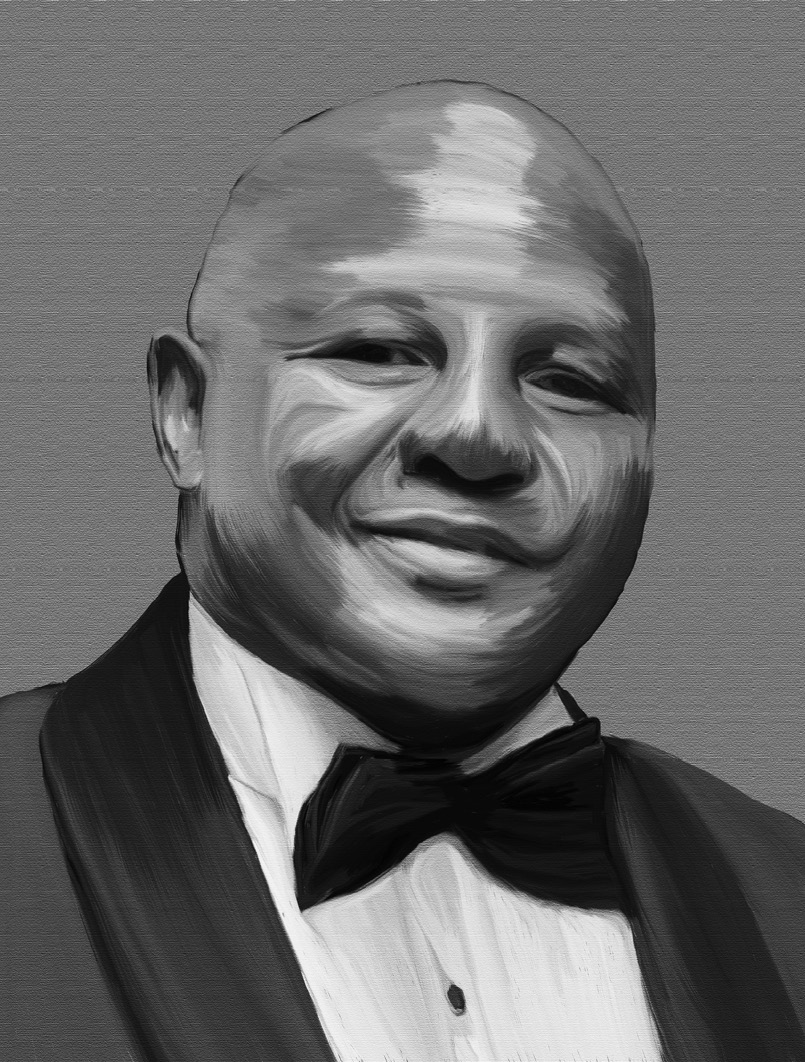
When Liyanda Handula was named Businessman of the Year at the 2025 Black Business Quarterly Awards, the accolade represented far more than recognition for entrepreneurial success. It reflected the emergence of a business leader whose influence is increasingly extending beyond the boundaries of his own organisation and into the broader conversations shaping South Africa’s economic future. Busi Radebe spoke to him ahead of his 50th birthday.
W
hile the award celebrated the achievements of Masithuthuke Holdings and the growth of a company that has become synonymous with skills development and human capital advancement, it also acknowledged something less tangible but equally significant. It recognised a leadership philosophy grounded in the belief that business should serve a purpose beyond profit and that sustainable success is measured not only by financial performance but also by the opportunities created for others.
The recognition arrived at a particularly significant moment in Handula’s journey. For more than a decade, he has worked to establish Masithuthuke Holdings as a respected player within South Africa’s skills development ecosystem. Along the way, the organisation has trained thousands of South Africans, built partnerships across the public and private sectors, and positioned itself as a trusted contributor to workforce development initiatives. Yet the past eighteen months have marked a noticeable shift in the nature of Handula’s influence.
Increasingly, he is being called upon not simply as a business owner or training specialist but as a participant in national conversations around economic transformation, education, inclusion, and the future of work. This transition has not been orchestrated through a carefully crafted public profile. Rather, it has emerged organically from years of practical engagement with the realities facing young people, entrepreneurs, and communities seeking meaningful access to economic opportunity.
In many respects, Handula’s growing influence reflects the evolution of South African business leadership itself. The country’s challenges are complex and deeply interconnected. Unemployment, inequality, education outcomes, skills shortages, and economic inclusion cannot be addressed in isolation. Increasingly, there is recognition that business leaders must contribute more than investment and job creation. They must also contribute ideas, partnerships, and solutions. This expectation has created a new generation of business leaders whose value lies not only in the organisations they build but in their ability to help shape the conversations that influence policy, development, and economic participation. Handula has steadily emerged as one of those voices.
That emergence is rooted in practical experience rather than abstract theory. Through Masithuthuke Holdings, he has spent years working at the intersection of education, employment, and economic participation. He has seen the aspirations of young people entering training programmes. He has worked with employers struggling to find suitably skilled candidates. He has engaged entrepreneurs seeking opportunities to grow their businesses and communities searching for pathways into the mainstream economy. These experiences have given him a perspective that is both grounded and pragmatic. They have also reinforced a conviction that continues to define his leadership approach which is that opportunity remains the most powerful tool available for addressing inequality and unlocking potential.
Today, Masithuthuke Holdings remains a 100% black-owned enterprise whose workforce is approximately 90% women and 97% youth. While these statistics speak to transformation, they also tell a broader story about organisational values. For Handula, empowerment has never been something that exists solely within policy documents or annual reports. It is something that should be visible in the composition of an organisation, reflected in its leadership structures and evident in the opportunities it creates. The company’s growth has therefore been accompanied by a deliberate effort to ensure that empowerment is embedded in its culture and operations. This commitment has become one of the defining features of the organisation and has helped shape its reputation as a business that combines commercial success with social impact.
The significance of Masithuthuke’s work has become even more pronounced against the backdrop of South Africa’s persistent unemployment crisis. Youth unemployment remains one of the country’s most pressing challenges, affecting millions of young people whose ambitions are often constrained by a lack of opportunity. While the causes of unemployment are varied and complex, Handula has long argued that skills development must form part of any meaningful solution. Access to education and training does not guarantee employment, but the absence of relevant skills significantly limits the ability of individuals to participate in the economy. This understanding has guided the strategic direction of Masithuthuke Holdings from its earliest days and continues to inform the organisation’s interventions today.
The company’s programmes span a range of disciplines, including information and communication technology, finance, accounting, entrepreneurship, workplace readiness, and professional development. Yet beyond the technical skills being imparted lies a broader objective. The aim is not simply to train individuals but to create pathways into economic participation. Every learner who acquires a new skill, secures employment or launches a business contributes to a wider process of empowerment and inclusion. For Handula, this is where the true value of skills development lies. It creates agency. It enables individuals to improve their circumstances and participate more fully in society. It also generates broader economic benefits by strengthening the country’s human capital base.
This practical understanding of empowerment increasingly informs Handula’s engagement with issues beyond the immediate scope of his business. Nowhere was this more evident than in Masithuthuke Holdings’ involvement in the Frank Dialogue on the Future of Broad-Based Black Economic Empowerment in South Africa. Convened in Sandton during 2025, the dialogue brought together government leaders, business executives, academics, policymakers, and civil society representatives to explore the future of one of South Africa’s most important economic transformation frameworks. At a time when public debates around B-BBEE had become increasingly polarised, the initiative sought to create a platform for honest engagement and constructive discussion.
For Handula, supporting the dialogue was a natural extension of the work he had been doing for years. His perspective on transformation has been shaped not by ideology but by direct experience. Through Masithuthuke Holdings, he has witnessed both the opportunities created through empowerment initiatives and the challenges that continue to limit broader economic participation. He understands that transformation remains essential in a society still grappling with the legacy of exclusion. At the same time, he recognises that policy frameworks must continually evolve to remain relevant, effective, and responsive to changing economic realities. This balanced perspective informed his approach to the dialogue and contributed to the credibility of his participation.
What distinguished Handula’s involvement was his insistence that conversations about transformation must ultimately focus on outcomes. South Africa has no shortage of conferences, summits, and policy discussions. Across sectors, stakeholders regularly gather to debate challenges and propose solutions. Yet too often these conversations conclude without producing tangible outcomes capable of informing future action. Handula has long maintained that dialogue without implementation risks becoming an exercise in repetition. Meaningful engagement must generate ideas, recommendations, and interventions that can contribute to real change. It was this conviction that ultimately informed Masithuthuke Holdings’ decision to support the research project that emerged from the dialogue.
The decision to fund the research reflected a broader leadership philosophy that has become increasingly evident throughout Handula’s career. He believes that evidence matters. In an era characterised by polarised debates and competing narratives, thoughtful analysis, and credible research provide an essential foundation for informed decision making. By supporting the project, Handula sought to ensure that the discussions generated during the dialogue would not disappear once participants returned to their respective organisations. Instead, they would contribute to a body of knowledge capable of informing future conversations about transformation and economic inclusion.
The resulting report examined both the achievements and shortcomings of B-BBEE while exploring practical recommendations aimed at strengthening its impact. Importantly, it sought to move beyond simplistic arguments either for or against transformation. Instead, it focused on how empowerment frameworks could become more effective, more inclusive, and more responsive to contemporary economic realities.
This approach aligned closely with Handula’s own perspective. He has consistently argued that South Africa has already settled the question of whether economic inclusion matters. The more important challenge is ensuring that transformation delivers measurable outcomes and creates meaningful opportunities for individuals and businesses alike.
His contribution extended beyond financial support. As a sponsor, Handula authored the foreword to the publication, offering reflections on transformation, opportunity, and economic participation. The foreword struck a thoughtful and constructive tone. It acknowledged the progress that has been achieved while recognising the work that remains. Rather than defending the status quo or advocating radical change, it called for continuous improvement, accountability, and a renewed focus on outcomes. In doing so, it reflected the same pragmatic mindset that has characterised much of Handula’s leadership journey.
The significance of this involvement extends beyond the dialogue itself. It signals the emergence of a business leader increasingly willing to invest not only in programmes and projects but also in ideas. It demonstrates a recognition that shaping the future requires more than operational excellence. It requires participation in the conversations that influence policy, strategy, and development. Increasingly, Handula appears comfortable occupying this space, contributing perspectives informed by both entrepreneurial experience and developmental commitment.
The same commitment to practical solutions has shaped his engagement with education and skills development, issues that remain central to both his professional journey and South Africa’s future. Long before he became involved in national policy discussions, Handula was focused on helping individuals acquire the skills required to participate meaningfully in the economy. Years of working directly with learners, graduates, and employers have provided him with a unique understanding of both the strengths and weaknesses of the country’s education ecosystem. He understands the transformative power of education because he has witnessed its impact repeatedly.
He has also seen the consequences when education systems fail to equip young people with the skills demanded by a rapidly changing labour market.
This perspective informed his involvement in the Frank Dialogue on the Future of Education and Skills Development, convened this year as part of the commemoration of 50 years since the June 16 uprising. For Handula, the significance of June 16 extends beyond historical remembrance. The young people who marched in 1976 were demanding dignity, opportunity, and access to quality education. Their struggle was ultimately about creating a future in which education could serve as a pathway to empowerment rather than a tool of exclusion. Fifty years later, South Africa continues to grapple with many of the same underlying questions. How do we ensure access to quality education? How do we prepare young people for meaningful participation in society and the economy? How do we create an education system capable of responding to changing realities?
These questions have become even more urgent in an era defined by technological disruption. Artificial intelligence, automation, and digital transformation are reshaping industries across the world. Jobs that exist today may look very different within a decade. New occupations are emerging while traditional roles continue to evolve. In this environment, preparing young people for the future requires more than conventional approaches to education and training. It requires adaptability, innovation, and a commitment to lifelong learning. Handula has consistently argued that South Africa cannot afford to prepare learners for yesterday’s economy. The focus must be on equipping them for the opportunities and challenges that lie ahead.
This future-oriented perspective has increasingly influenced the work of Masithuthuke Holdings. The organisation continues to adapt its programmes to ensure that learners acquire not only technical skills but also the competencies required to navigate a changing world. Digital literacy, problem-solving, adaptability, and entrepreneurial thinking are becoming increasingly important components of workforce readiness. By integrating these considerations into programme design, Masithuthuke seeks to prepare individuals for a future characterised by constant change.
At the same time, Handula recognises that education reform cannot be achieved by educational institutions alone. Business must play a more active role. Employers cannot simply criticise the quality of graduates while remaining passive observers. They must become partners in the development process. This means collaborating with training providers, supporting workplace learning opportunities, and helping to align curricula with industry needs. It also means recognising that workforce development is a shared responsibility. Sustainable progress will require collaboration between government, business, educational institutions, and civil society.
This emphasis on collaboration has become one of the defining features of Handula’s leadership style. Whether supporting research projects, participating in national dialogues or developing strategic partnerships, he consistently seeks opportunities to bring stakeholders together around shared objectives. In doing so, he has increasingly assumed the role of a convenor, someone capable of bridging different sectors and facilitating conversations that might otherwise remain fragmented. This ability is gradually becoming a valuable asset in a country where many challenges require collective action rather than isolated interventions.
Another important milestone in Handula’s expanding leadership journey came through his appointment by BANKSETA to advance skills development opportunities for persons with disabilities. While disability inclusion is often discussed within policy circles, significant barriers continue to limit access to education, training, and employment for many South Africans living with disabilities. These barriers are not simply physical. They are also social, economic, and institutional. Too often, talented individuals are prevented from reaching their full potential because systems fail to accommodate their needs or recognise their capabilities.
For Handula, addressing these barriers aligns closely with the principles that have guided Masithuthuke Holdings from the beginning. Skills development has never been solely about qualifications. It has always been about participation. It has always been about creating opportunities for those who remain excluded from mainstream economic activity. The BANKSETA appointment therefore represents more than professional recognition. It reflects confidence in his ability to advance inclusive development and contribute to national efforts aimed at expanding opportunity for persons with disabilities.
The appointment also highlights the growing recognition of Masithuthuke Holdings as a trusted partner capable of contributing meaningfully to national priorities. As South Africa continues to pursue more inclusive growth, organisations with proven experience in skills development and workforce preparation will play an increasingly important role. Handula’s involvement in this work reinforces his broader commitment to ensuring that economic participation is accessible to all.
As Masithuthuke Holdings enters its second decade, it does so from a position of considerable strength. The company continues to expand its impact through skills development programmes, enterprise support initiatives, strategic partnerships, and innovative interventions designed to address evolving economic challenges. Yet perhaps the most significant development is the expansion of Handula’s influence beyond the organisation itself. Increasingly, he is contributing to conversations that shape thinking around transformation, education, inclusion, and economic participation. In doing so, he is helping to bridge the gap between business experience and national development priorities.
For South Africa’s emerging generation of black business leaders, Handula’s story offers an important lesson. Sustainable leadership is rarely built through visibility alone. It is built through credibility, consistency, and the ability to solve real problems over time. Long before he was participating in national dialogues, funding research projects or contributing to policy discussions, he was focused on building programmes, developing partnerships, and helping people gain access to skills that could improve their lives.
His career also challenges the notion that business success and social purpose exist in opposition to one another. Throughout the growth of Masithuthuke Holdings, commercial objectives have been pursued alongside a broader commitment to education, empowerment, and economic participation. That balance has allowed the company to build both a successful enterprise and a respected reputation.
As black business assumes a larger role in shaping South Africa’s future, leaders who combine entrepreneurial success with developmental purpose will become more influential. Handula belongs to a generation of business leaders who understand that the real measure of success extends beyond balance sheets and annual reports. It is found in the people developed, the businesses supported, the ideas advanced, and the opportunities created for others.
The award he received in 2025 recognised those achievements. What has followed since then suggests that the recognition was not the culmination of a career but the beginning of a new chapter. As Masithuthuke Holdings expands its reach and Handula’s voice carries greater weight in national discussions, his role is evolving from entrepreneur to builder of institutions, convenor of ideas and advocate for practical solutions.
In a country searching for growth, inclusion and renewal, that may prove to be his most important contribution yet.
Busi Radebe is a freelance writer and General Manager for Media at Frank Dialogue Holdings.